ServPro vs. Moss Home Improvement: Which Handles Water Damage?
comparison · September 28, 2026 · Editorial Team
Table of Contents
- Understanding Water Damage Restoration vs. General Contracting
- ServPro: National Franchise Model for Emergency Response
- Moss Home Improvement: Local Remodeling Focus
- How to Waterproof a Bathroom Floor Properly: Prevention First
- Emergency Response and 24/7 Availability Comparison
- When to Call a Specialist vs. a General Contractor
- Making Your Decision: Scope, Timeline, and Insurance
- Frequently Asked Questions
Last Updated: September 28, 2026
Understanding Water Damage Restoration vs. General Contracting
When comparing servpro vs moss home improvement, water damage and general home improvement require different expertise. A burst pipe demands immediate mitigation and structural drying; a kitchen remodel requires skilled craftsmanship. Confusing the two costs homeowners time and money.
Restoration companies like ServPro specialize in emergency response, water extraction, dehumidification, and mold remediation. They work against the clock to prevent further damage. General contractors like Moss Home Improvement focus on renovation, remodeling, and reconstruction after the damage is contained. They rebuild what was lost.
In the servpro vs moss home improvement comparison, the question isn't which is "better", it's which solves your problem. Active water damage requires a restoration specialist immediately. Reconstruction requires a general contractor. Calling a general contractor first during active damage costs thousands in preventable secondary damage.
ServPro: National Franchise Model for Emergency Response
ServPro operates as a franchise network specializing in emergency response. Their core competency is speed, deploying crews within hours with industrial-grade drying equipment and insurance coordination. For catastrophic water damage, this matters.
ServPro's 24/7 model handles water extraction, dehumidification, and mold remediation with industry-standard protocols. The franchise structure provides local presence but variable service quality.
Their insurance relationships are a significant advantage, they handle claim documentation and administrative burden, simplifying the mitigation phase.
ServPro doesn't handle full reconstruction. Once dried and stabilized, they hand off to a general contractor, creating a coordination gap between two companies and two payment processes.
Moss Home Improvement: Local Remodeling Focus
Moss Home Improvement is a general contracting and remodeling firm specializing in renovation, bathroom updates, kitchen remodels, and structural repairs, excelling at reconstruction after damage is contained.
Moss offers local presence and can pull permits, manage inspections, and deliver finished work. Their focus is reconstruction, not emergency response.
Moss lacks industrial drying equipment, 24/7 emergency response, and rapid mold remediation training. Calling Moss for active water damage is calling the wrong specialist.
How to Waterproof a Bathroom Floor Properly: Prevention First
Prevention is the best mitigation. A properly waterproofed bathroom floor stops problems before they start, but requires honest assessment of your skill level and the cost of failure.
The DIY vs. Professional Threshold
Small maintenance, caulking gaps, resealing grout, costs $50-$200 and prevents water from pooling. Catching these before water penetrates the subfloor is most cost-effective.
Full bathroom waterproofing during renovation requires professional work. Modern waterproofing needs three layers, each with installation requirements that determine success or failure.
Three layers are required: a moisture barrier on the subfloor, waterproof mortar bed under tile, and grout sealer after curing. This redundancy ensures that if one layer fails, others catch water before it reaches the structure.
The most common DIY mistake is skipping the waterproof mortar bed and relying only on grout sealer. Grout is porous; water migrates through it within months, creating mold and rot. Fixing this later requires removing compromised subfloor and treating mold, costs escalate from $500 to $5,000+.
Installation Details That Separate Success From Failure
Membranes require proper overlap at seams (6 inches minimum) and transitions. Corners and penetrations demand specialized flashing. Rushed installation creates invisible gaps where water penetrates months later.
Regional building codes matter, some require specific membranes, cure times, or additional protection. Licensed contractors know these requirements; DIY homeowners often don't.
When to Hire a Professional
Hire a licensed contractor for bathroom waterproofing if: (1) doing full renovation or new construction; (2) uncertain about subfloor condition or hidden moisture; (3) bathroom has constant moisture exposure; or (4) you want warranty and insurance coverage.
Licensed contractors carry liability insurance and are accountable to building departments. If waterproofing fails, you have recourse. DIY failure leaves you bearing full remediation costs.
A licensed Class A contractor can assess your bathroom layout, local moisture patterns, and code requirements. Assessment costs $100-$300 but prevents thousands in secondary damage.
Emergency Response and 24/7 Availability Comparison
The first 24-48 hours determine the outcome. Mold begins growing within 48 hours. Every hour of delay increases damage and cost.
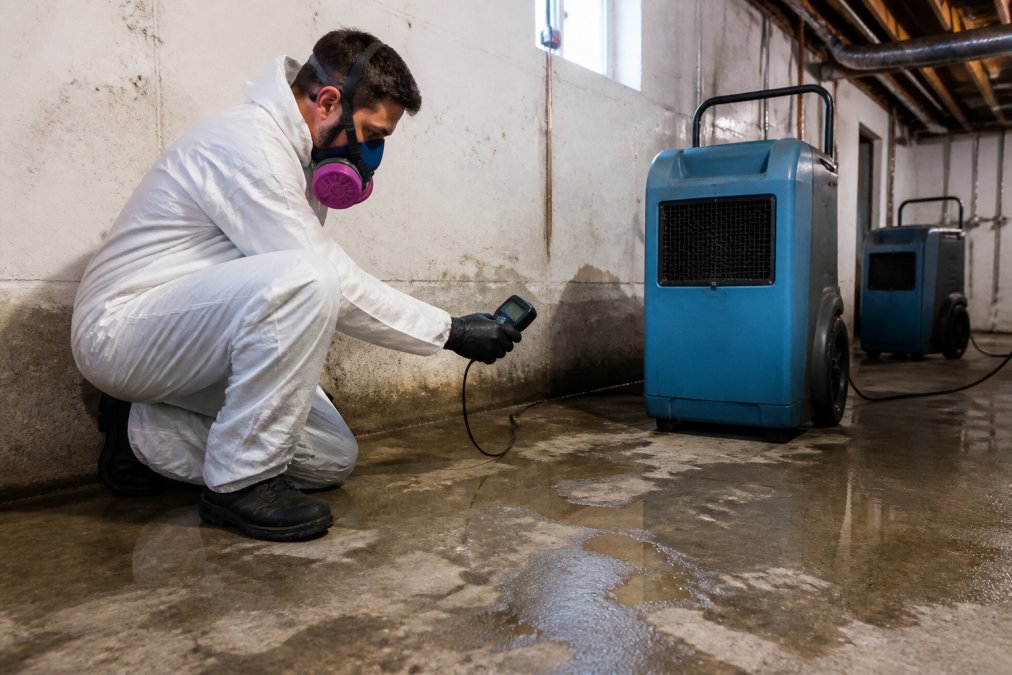 Professional restoration technician in protective gear and respirator using moisture detection equipment to assess water damage in a residential basement with industrial dehumidifiers running
ServPro's advantage is 24/7 availability. Crews arrive within hours with water extractors and dehumidifiers that pull moisture before permanent damage occurs. Speed is their core value.
Moss Home Improvement operates during standard business hours. If you call Friday night with water damage, you're waiting until Monday. By Monday morning, the damage has progressed. Mold is colonizing. Drywall is compromised. Subfloors are warping. This delay is not Moss's fault, they're a remodeling contractor, not an emergency response company. But it illustrates why you need different specialists for different phases.
The restoration industry standard is to complete initial mitigation within 24-48 hours. This window is critical. A restoration company that can't meet it is failing at their core function. ServPro's franchise network and 24/7 staffing model is designed precisely for this constraint.
| Service | ServPro | Moss Home Improvement |
|---|---|---|
| 24/7 Emergency Response | Yes | No |
| Water Extraction & Drying | Specialized equipment | Not primary service |
| Mold Remediation | Yes, certified protocols | General contractor scope |
| Speed to first response | Hours | Business hours (next day) |
| Insurance coordination | Built into process | Handled per project |
| Full reconstruction | Subcontracted | In-house capability |
When to Call a Specialist vs. a General Contractor
The decision tree is straightforward: active water damage = specialist; reconstruction = general contractor.
If you have a burst pipe, flooding, roof leak, or any active water intrusion, call a restoration company immediately. Do not wait. Do not call a general contractor first. The mitigation window is measured in hours. A restoration company has the equipment, training, and availability to act in that window.
Once the property is dried and stabilized, typically 5-10 days after initial mitigation, you shift to reconstruction. This is where a general contractor takes over. They assess what needs to be rebuilt, pull permits, coordinate inspections, and deliver finished work. This phase can take weeks or months depending on damage severity.
The gray area is partial damage. A small bathroom leak that's been contained might not require emergency mitigation. But even small water intrusions can hide mold growth behind walls. A restoration professional can use moisture detection equipment to find hidden water and assess whether mitigation is needed. This assessment is worth the cost.
For homeowners in Southside Virginia, SmithFamilyPaintingandProjects offers general contracting expertise. As a licensed, bonded, and insured Class A contractor with 24/7 emergency services, they can handle the full spectrum, from initial mitigation coordination through final reconstruction.
Making Your Decision: Scope, Timeline, and Insurance
Three factors determine which service you need: scope of damage, timeline, and insurance involvement. Understanding how insurance claims work across the mitigation and reconstruction phases eliminates confusion and prevents costly delays.
Scope Determines the Specialist
Timeline Is Non-Negotiable for Active Damage
Insurance Involvement: How Claims Actually Work
Here's the typical sequence:
-
You file a claim with your insurance company immediately after discovering damage. The insurer assigns a claims adjuster to assess the damage and determine coverage limits.
-
The adjuster inspects the property and documents damage with photos, measurements, and notes. This inspection typically happens within 24-48 hours. The adjuster's report determines what the insurance company will pay for.
-
Mitigation begins immediately, often before the adjuster arrives. Restoration companies understand this timing, they start emergency response (water extraction, dehumidification) while the claim is being processed. Most insurance policies cover mitigation costs separately from reconstruction, and restoration companies are expert at documenting this work for claim reimbursement.
-
Restoration companies bill the insurance company directly for mitigation work. They provide detailed invoices, equipment logs, and before/after documentation. The insurer pays the restoration company within 30-60 days. You typically pay nothing out of pocket for mitigation if the claim is approved.
-
Reconstruction begins after mitigation is complete and the adjuster has approved the scope of repair. This is where a general contractor takes over. The contractor provides an estimate to the insurance company. If the estimate exceeds the claim limit, you may be responsible for the overage, or the contractor may adjust scope to fit the approved amount.
-
General contractors also bill insurance directly for reconstruction work, though some require a deposit or partial payment upfront. The insurer pays the contractor as work progresses (typically in draws: 25% at start, 50% at midpoint, 25% at completion).
The Critical Gap: Coordination Between Mitigation and Reconstruction
Insurance Coordination Differences
What to Ask Before Hiring
Before engaging a restoration company or general contractor, ask:
- Will you bill my insurance company directly, or do I pay upfront and seek reimbursement?
- What documentation do you provide for the insurance adjuster?
- How do you coordinate with the other phase (mitigation or reconstruction) to ensure continuity?
- What happens if the insurance claim is denied or covers less than the estimate?
- Do you have experience with claims in my area, and do you know the typical approval timeline?
Frequently Asked Questions
What's the difference between water damage restoration and general contracting?
Water damage restoration focuses on emergency mitigation, structural drying, mold remediation, and damage assessment after water intrusion. General contractors handle remodeling, renovations, and structural repairs. ServPro specializes in restoration; Moss Home Improvement handles renovation and remodeling. For acute water damage, you need a restoration specialist first, then a contractor for reconstruction if needed.
How do I know if I need a specialist for water damage or if a general contractor can handle it?
If water damage is fresh or ongoing, hire a restoration specialist immediately for mitigation and drying. General contractors typically cannot address mold remediation, dehumidification, or structural drying properly. Once damage is stabilized and assessed, a licensed contractor rebuilds or remodels affected areas. Combining both services ensures proper recovery and prevents future problems.
How should I waterproof a bathroom floor properly to prevent water damage?
Install a waterproof membrane under tile or flooring before finishing. Use proper grout and sealant around fixtures and edges. Ensure adequate ventilation and slope floors toward drains. Apply waterproofing to walls behind tubs and showers. Proper installation during renovation prevents costly damage later. A licensed contractor with remodeling experience ensures correct waterproofing technique and materials.
Can ServPro or Moss Home Improvement both handle my water damage and the repairs afterward?
ServPro handles mitigation and cleanup but refers reconstruction to contractors. Moss Home Improvement handles renovation and repairs but isn't equipped for emergency water damage response. You may need both services sequentially: restoration first for emergency stabilization, then a contractor for remodeling. Check with local providers about partnership arrangements or dual-service capabilities.
Frequently asked questions
What's the difference between water damage restoration and general contracting?
Water damage restoration focuses on emergency mitigation, structural drying, mold remediation, and damage assessment after water intrusion. General contractors handle remodeling, renovations, and structural repairs. ServPro specializes in restoration; Moss Home Improvement handles renovation and remodeling. For acute water damage, you need a restoration specialist first, then a contractor for reconstruction if needed.
How do I know if I need a specialist for water damage or if a general contractor can handle it?
If water damage is fresh or ongoing, hire a restoration specialist immediately for mitigation and drying. General contractors typically cannot address mold remediation, dehumidification, or structural drying properly. Once damage is stabilized and assessed, a licensed contractor rebuilds or remodels affected areas. Combining both services ensures proper recovery and prevents future problems.
How should I waterproof a bathroom floor properly to prevent water damage?
Install a waterproof membrane under tile or flooring before finishing. Use proper grout and sealant around fixtures and edges. Ensure adequate ventilation and slope floors toward drains. Apply waterproofing to walls behind tubs and showers. Proper installation during renovation prevents costly damage later. A licensed contractor with remodeling experience ensures correct waterproofing technique and materials.
Can ServPro or Moss Home Improvement both handle my water damage and the repairs afterward?
ServPro handles mitigation and cleanup but refers reconstruction to contractors. Moss Home Improvement handles renovation and repairs but isn't equipped for emergency water damage response. You may need both services sequentially: restoration first for emergency stabilization, then a contractor for remodeling. Check with local providers about partnership arrangements or dual-service capabilities.