Residential Drywall Installation Services: A 2026 Guide
ultimate-guide · September 26, 2026 · Editorial Team
Table of Contents
- What Residential Drywall Installation Services Include
- Drywall Installation Cost Per Square Foot: What Affects Your Price
- How Long Does Drywall Installation Take
- Why Hiring Licensed Drywall Contractors Matters
- The Professional Drywall Installation Process
- Drywall Repair and Finishing Services
- Getting Free Estimates for Your Drywall Project
- Frequently Asked Questions
Last Updated: September 26, 2026
What Residential Drywall Installation Services Include
Residential drywall installation services form the backbone of interior construction and renovation projects. These services encompass hanging drywall sheets on wall and ceiling framing, taping seams, applying joint compound, sanding surfaces smooth, and applying finishing coats to create seamless interior walls. At SmithFamilyPaintingandProjects, we understand that quality drywall installation services require precision, experience, and attention to detail from the initial measurement through final paint-ready surfaces.
The scope of drywall installation services typically includes site assessment, material selection, sheet hanging using proper fastening techniques, seam treatment with specialized taping and mudding processes, and surface finishing that creates a professional appearance. Professional contractors handle moisture-resistant drywall in bathrooms and kitchens, fire-rated drywall in certain areas, and standard gypsum board in living spaces. Each type of drywall serves specific purposes based on the room's environment and building code requirements.
Beyond basic installation, comprehensive drywall installation services often include wallboard repair for existing damage, texture application for aesthetic preferences, and integration with other trades like electrical and plumbing. The quality of drywall installation directly impacts the final appearance of your interior spaces and the longevity of your home's structural integrity.
Drywall Installation Cost Per Square Foot: What Affects Your Price
Understanding drywall installation cost per square foot helps homeowners budget accurately for residential projects. A transparent cost breakdown empowers you to evaluate estimates and plan your renovation budget.
Typical Cost Ranges by Project Type
Pricing for drywall hanging and finishing depends on factors such as the type of gypsum board, room complexity, material costs, labor for hanging, taping, mudding, and sanding to create a paint-ready surface. Specialty finishes, textured surfaces, knockdown patterns, or smooth high-end finishes, also impact labor costs.
Removal of existing drywall before new installation adds to labor costs. Water-damaged drywall replacement, which requires moisture assessment and potential mold remediation, can also impact the overall price depending on damage extent. Ceiling installation typically costs more per square foot than wall installation due to safety equipment requirements and physical demands on installers.
Material Selection Impact on Total Cost
Standard 1/2-inch gypsum drywall is an economical choice for living areas, bedrooms, and basements where moisture and fire rating are not concerns. Moisture-resistant drywall (often called "green board") should be used in bathrooms, kitchens, laundry rooms, and any area with high humidity or splash exposure. Using standard drywall in moisture-prone areas can lead to mold growth, structural damage, and costly remediation.
Fire-rated drywall (Type X), required by building code in certain locations such as attached garages, furnace rooms, and some multi-family applications, contains additives that slow fire spread and is essential for code compliance; skipping it in required areas creates liability and fails inspections.
Labor Cost Variables
Labor represents a significant portion of total drywall installation cost. Experienced crews complete projects faster while maintaining quality. Room complexity dramatically affects labor time: a simple rectangular bedroom costs less per square foot than a room with vaulted ceilings, multiple corners, built-in shelving, or architectural features requiring custom cuts and fitting.
Ceiling height above eight feet requires additional scaffolding, safety equipment, and physical effort, increasing labor costs. Tight spaces, finished basements, or areas with limited access add to labor estimates due to slower material movement and installation techniques. Removal of existing drywall, electrical outlet boxing, and coordination with other trades (plumbing, HVAC, electrical) extend timelines and increase labor costs.
Getting Accurate Estimates
Reputable contractors provide detailed written estimates that break down material costs, labor rates, finishing specifications, and timeline. Request estimates that specify drywall type, square footage, finishing level (basic three-coat mud versus specialty texture), and any removal or prep work. Compare estimates from licensed contractors to understand market rates in your area. The lowest estimate often reflects inexperience or corner-cutting; the highest may include unnecessary services. Estimates from licensed, insured contractors with positive reviews typically represent good value.
SmithFamilyPaintingandProjects provides free estimates with itemized cost breakdowns so you understand exactly what drives your project price. We assess your specific room conditions, material requirements, and finishing preferences to deliver accurate pricing rather than generic quotes.
How Long Does Drywall Installation Take
Project timeline is a critical consideration for homeowners planning renovations. How long drywall installation takes depends on several variables including project scope, room size, complexity, and crew experience level.
Basic drywall hanging for a single room requires a certain number of days. Larger projects spanning multiple rooms or entire home interiors require proportionally longer timelines. Ceiling installation generally takes longer than wall installation due to safety requirements and physical demands.
The finishing phase extends the overall timeline significantly. After hanging drywall sheets, the taping and mudding process requires multiple coats with drying time between applications. Each mud coat typically requires drying time before sanding and the next application. A professional finish usually involves multiple coats depending on desired smoothness. Full finishing can extend a project timeline beyond the hanging phase.
Texture application or specialty finishes add additional time. Environmental factors matter too, humidity levels and temperature affect drying times. Professional crews manage these variables through experience and proper ventilation techniques. Rushing the drying process compromises finish quality and creates visible imperfections.
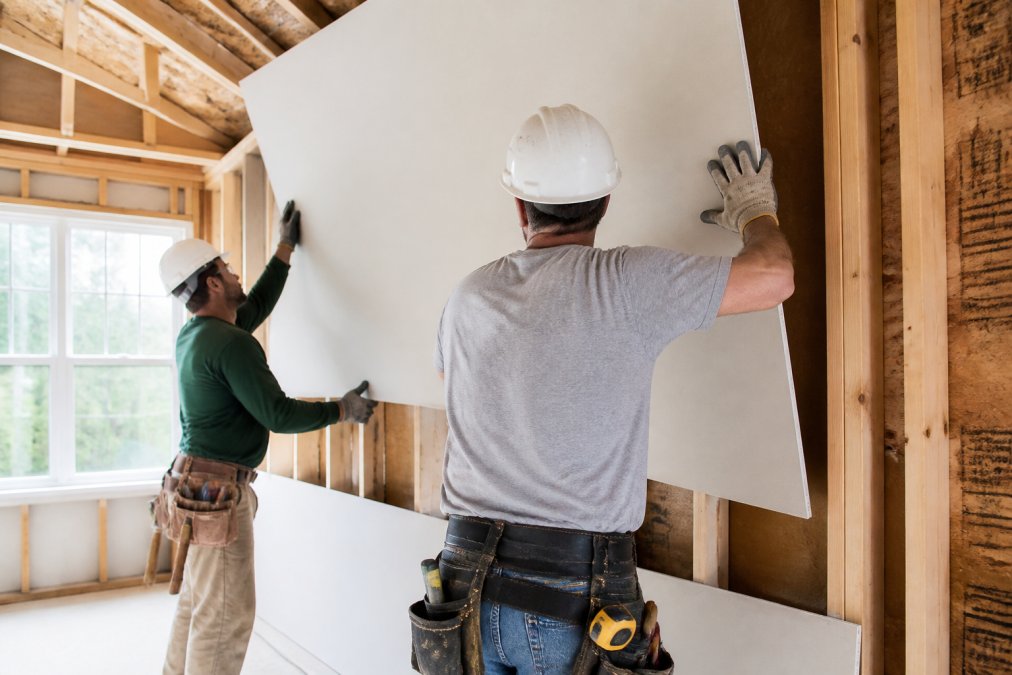 Professional drywall installers hanging large sheets of drywall on interior walls of a residential home under construction, showing proper technique and safety equipment, with natural light from windows
Why Hiring Licensed Drywall Contractors Matters
The decision to hire licensed contractors for drywall installation services protects your investment and ensures code compliance. Licensed drywall contractors have completed required training, passed examinations, and maintain current credentials demonstrating competency in their trade.
Licensing requirements vary by jurisdiction but typically involve documented apprenticeship hours, practical skills assessment, and knowledge of building codes. Licensed contractors understand local building codes and permit requirements specific to your area. This knowledge prevents costly code violations that could complicate future home sales or insurance claims. Professional licensing also provides recourse if work falls below acceptable standards.
Insurance and bonding protect homeowners from liability. Licensed contractors typically carry workers' compensation insurance and liability coverage, protecting you from financial responsibility if injuries occur on your property. Bonding provides additional assurance that the contractor will complete work as agreed or provide compensation for unfinished projects.
Experience matters significantly in drywall installation quality. Licensed contractors have invested time building expertise, understanding material properties, mastering finishing techniques, and developing efficient workflows. This experience translates directly to quality results and efficient project completion. SmithFamilyPaintingandProjects maintains Class A contractor licensing in Virginia, ensuring we meet the highest professional standards for drywall installation services in residential projects.
The Professional Drywall Installation Process
Understanding the professional drywall installation process helps homeowners appreciate the expertise required for quality results. The process begins with site preparation and measurement. Professional crews assess wall and ceiling framing, identify electrical and plumbing locations, and measure accurately to minimize waste and ensure proper fit.
Material selection follows assessment. Contractors determine appropriate drywall types based on room function, moisture exposure, and fire-rating requirements. Bathrooms and kitchens typically require moisture-resistant drywall. Basements and areas prone to dampness benefit from specialized moisture barriers. Standard gypsum board suits most living areas where moisture isn't a concern.
Hanging involves securing drywall sheets to framing using appropriate fasteners spaced according to code requirements.
Drywall Repair and Finishing Services
Beyond new installation, professional drywall repair and finishing services address damage, wear, and aesthetic improvements in existing homes. Small holes and cracks require patching using specialized compounds and techniques. Larger damage may require cutting out damaged sections and installing new drywall patches.
Getting Free Estimates for Your Drywall Project
Obtaining free estimates from qualified contractors provides essential information for budgeting and planning residential drywall installation services. Multiple estimates allow comparison of pricing, timelines, and contractor qualifications. Reputable contractors provide detailed written estimates that break down labor costs, material expenses, and project timeline.
| Factor | Impact on Estimate | What to Compare |
|---|---|---|
| Room Size | Larger areas cost more in total labor | Square footage and complexity |
| Finishing Level | Basic vs. specialty finishes | Mud coats, texture, smoothness |
| Material Type | Moisture-resistant costs more | Standard vs. specialty drywall |
| Existing Conditions | Removal and prep add costs | New construction vs. renovation |
| Timeline | Faster completion may cost more | Standard vs. expedited schedule |
Frequently Asked Questions
What type of contractor installs drywall?
Licensed general contractors and specialized drywall contractors handle residential drywall installation services. In Virginia, Class A contractors are fully licensed and bonded to perform all phases of drywall work, from hanging and taping to finishing and texturing. Verify your contractor holds a current Virginia Class A HIC license, carries liability insurance, and has bonding in place. This protects you if the project runs over budget or the contractor abandons the job.
How long does drywall installation take for a typical room?
Timeline depends on room size, wall complexity, and whether finishing is included. Hanging drywall on interior walls typically takes a few days for an average room. Taping, mudding, and sanding add additional days. Full finishing with texturing may add more time. Water damage repairs or basement finishing projects take longer due to moisture barriers and special materials. Always ask your contractor for a detailed schedule before work begins.
Why should I hire a Class A contractor for drywall installation?
Class A contractors in Virginia have passed rigorous licensing requirements, carry bonding and insurance, and are held accountable through the state. This provides a level of recourse if work is substandard or incomplete. Class A contractors also understand local building codes and permitting requirements, helping ensure your project passes inspection. Unlicensed contractors may offer lower quotes but can leave you liable for code violations, failed inspections, and costly rework.
What is the difference between drywall installation and finishing?
Drywall installation means hanging sheets of gypsum board on framing and securing them with fasteners. Finishing includes taping seams with joint compound, sanding smooth, and applying texture or paint primer. Installation creates the walls; finishing makes them look polished and paint-ready. Many contractors offer both services, but some specialize in one. Confirm whether your quote covers hanging, taping, mudding, sanding, and primer, or if finishing is a separate cost.
Frequently asked questions
What type of contractor installs drywall?
Licensed general contractors and specialized drywall contractors handle residential drywall installation services. In Virginia, Class A contractors are fully licensed and bonded to perform all phases of drywall work, from hanging and taping to finishing and texturing. Verify your contractor holds a current Virginia Class A HIC license, carries liability insurance, and has bonding in place. This protects you if the project runs over budget or the contractor abandons the job.
How long does drywall installation take for a typical room?
Timeline depends on room size, wall complexity, and whether finishing is included. Hanging drywall on interior walls typically takes a few days for an average room. Taping, mudding, and sanding add additional days. Full finishing with texturing may add more time. Water damage repairs or basement finishing projects take longer due to moisture barriers and special materials. Always ask your contractor for a detailed schedule before work begins.
Why should I hire a Class A contractor for drywall installation?
Class A contractors in Virginia have passed rigorous licensing requirements, carry bonding and insurance, and are held accountable through the state. This provides a level of recourse if work is substandard or incomplete. Class A contractors also understand local building codes and permitting requirements, helping ensure your project passes inspection. Unlicensed contractors may offer lower quotes but can leave you liable for code violations, failed inspections, and costly rework.
What is the difference between drywall installation and finishing?
Drywall installation means hanging sheets of gypsum board on framing and securing them with fasteners. Finishing includes taping seams with joint compound, sanding smooth, and applying texture or paint primer. Installation creates the walls; finishing makes them look polished and paint-ready. Many contractors offer both services, but some specialize in one. Confirm whether your quote covers hanging, taping, mudding, sanding, and primer, or if finishing is a separate cost.