How to Prevent Water Damage in Basement: 2026 Guide
how-to · September 10, 2026 · Editorial Team
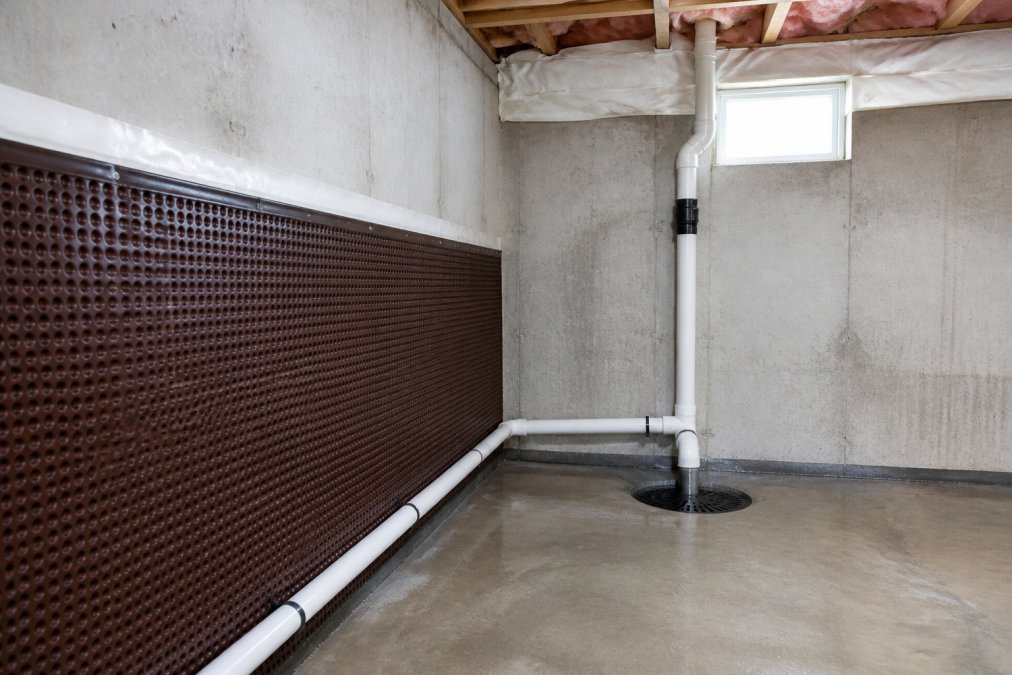
Table of Contents
- Spot the Warning Signs Before Water Damage Gets Worse
- Fix Grading and Drainage for Home Foundations
- Choose the Best Sump Pump for Basement Protection
- Seal Cracks and Apply Interior Waterproofing
- Manage Gutters, Downspouts, and Window Wells
- Control Humidity and Add Smart Leak Detection
- Know Your Insurance and When to Call a Pro
- Frequently Asked Questions
Last Updated: September 10, 2026
Spot the Warning Signs Before Water Damage Gets Worse
Learning how to prevent water damage in basement spaces starts with recognizing trouble early.
Basement water damage is the deterioration of a below-grade living space caused by moisture intrusion, seepage, or flooding. It rarely announces itself with a dramatic flood. Instead, it shows up quietly: white chalky deposits called efflorescence on block walls, a musty mildew smell that lingers after cleaning, paint peeling at the base of drywall, or a slight bow in the floor near a drain. Dark tide lines on concrete after a heavy rain mean water is already finding a path in.
The problem compounds. One wet season weakens mortar joints, feeds mold growth behind finished walls, and sets up the conditions for structural damage that costs far more to fix than the original leak. Catching seepage in week one is a weekend project. Catching it in year two is a renovation.
FEMA guidance on protecting homes from flooding recommends inspecting basements and crawl spaces before every rainy season, not after.
Fix Grading and Drainage for Home Foundations
The single most effective fix for most wet basements is correcting the slope of the ground around the house. Soil should drop at least six inches over the first ten feet away from the foundation. When grading slopes toward the house, every rainstorm sends water directly into the soil that surrounds your foundation, where hydrostatic pressure pushes it through any gap it can find.
Fixing it is physical work but simple:
- Add clean fill soil against the foundation and tamp it into a gentle slope away from the wall.
- Never let soil sit above the siding or brick line; leave a few inches of foundation exposed.
- Check that patios, walkways, and driveways slope away too, since they shed water like a roof.
- If the yard is flat or lower than the street, consider a French drain or sub-floor drainage system to move water away.
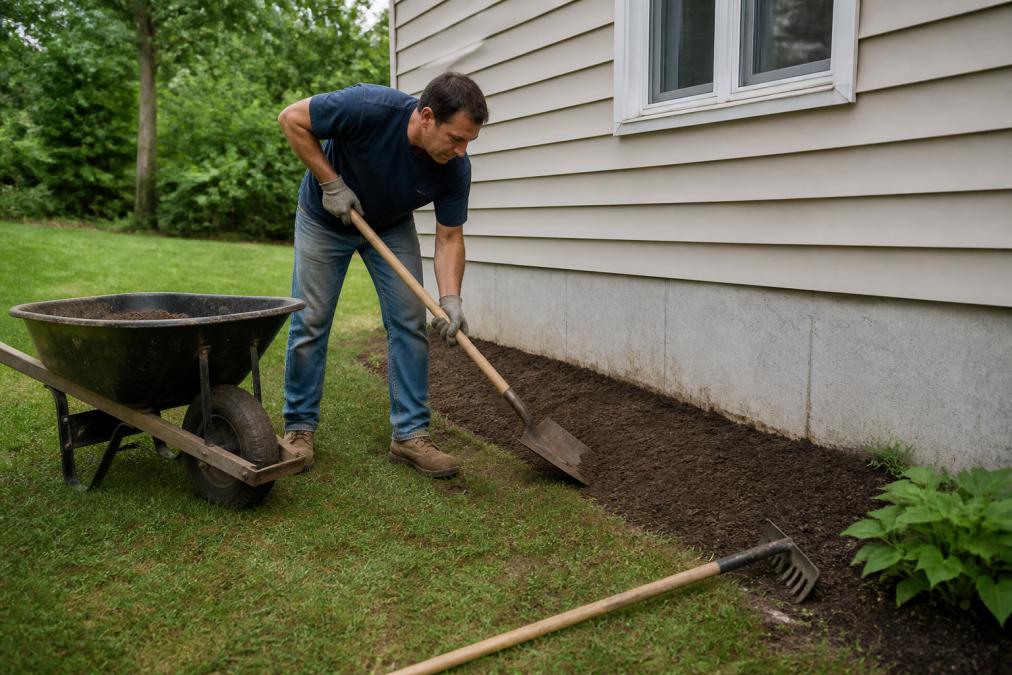 A homeowner shoveling soil against a house foundation to create a downward slope, with a wheelbarrow and garden tools nearby in a residential yard
Choose the Best Sump Pump for Basement Protection
The best sump pump for basement protection is a primary submersible pump paired with a battery-backup unit, sized to your inflow rate. A single pump that quits during a storm, exactly when you need it, leaves you with a flooded floor.
Sizing comes first. Pumps are rated in gallons per hour (GPH) at a stated lift height, usually 10 feet. A common residential rule of thumb is to match the pump's GPH at your actual discharge height to the volume your pit collects during the heaviest rain you see. If your pit fills faster than the pump can move water, the pump runs continuously and burns out. A licensed plumber or waterproofing contractor can measure inflow during a storm, but you can estimate it by timing how fast the pit refills after you empty it.
Two decisions matter most:
| Pump Type | Best For | Key Trade-off |
|---|---|---|
| Submersible primary | Most homes with a sump pit | Needs power; sits in water |
| Battery backup | Power outages during storms | Battery life is limited |
| Combination unit | Hands-off protection | Higher upfront investment |
Primary pump options. Submersible pumps sit inside the pit, run quieter, and are cooled by the water around them. Cast-iron or stainless-steel housings resist corrosion better than plastic. A cast-iron impeller handles small debris without jamming. Look for a pump with a solid float or a diaphragm switch rather than a mechanical float that can snag on the pit wall.
Backup power matters more than pump brand. Storms knock out power at the exact moment inflow peaks. Three backup approaches are common:
- Battery backup pump: A separate DC pump runs off a deep-cycle battery when the primary loses power. It handles a slower flow rate, so it buys time rather than matching the primary's capacity.
- Water-powered backup: Uses municipal water pressure to drive a venturi pump. No battery to maintain, but it only works while city water pressure holds and consumes a lot of water.
- Whole-home generator: Powers the primary pump and everything else. Highest cost, but the most reliable if outages are frequent.
Discharge line details. The discharge pipe should be at least the diameter the pump manufacturer specifies (often 1-1/4 to 1-1/2 inches), slope downhill, and terminate well away from the foundation, not into the same soil the pump is trying to drain. A check valve keeps water from flowing back into the pit when the pump shuts off. In cold climates, the line must drain fully or be buried below the frost line, or it freezes and the pump deadheads.
Maintenance schedule. Test the pump every few months by pouring a bucket of water into the pit and watching it cycle. Clean the intake screen, check the float for debris or binding, and confirm the discharge line isn't frozen or clogged. Replace the backup battery every three to five years, and test it under load, not just by pressing a button. Most pump failures are maintenance failures, not manufacturing ones.
Seal Cracks and Apply Interior Waterproofing
Foundation crack repair means filling the gap that lets water through, and epoxy injection is the standard method for poured concrete walls. A two-part epoxy is injected under pressure, cures hard, and bonds the crack closed from the inside. For block walls, hydraulic cement patched over the crack followed by a masonry sealer handles most hairline openings.
Interior waterproofing goes a step further. A moisture barrier or vapor barrier applied to the interior wall face, combined with a drainage channel at the base that routes water to the sump pit, manages seepage that comes through the wall itself rather than a single crack. This won't stop hydrostatic pressure from the outside, but it keeps the water off your floor and out of your finished space.
Manage Gutters, Downspouts, and Window Wells
Clogged gutters and short downspouts dump roof water right at the foundation, which undoes every grading fix you make. Clean gutters twice a year, and extend downspouts so they discharge at least four to six feet from the wall, ideally onto a splash block or into a buried drain line.
Window wells are the other common culprit. A well that fills with leaves and debris becomes a bathtub against your basement window. Install a cover, scoop out debris each fall, and make sure the well drains. If water pools in the well after rain, the drain at the bottom is clogged or missing.
- Clean gutters in spring and fall
- Extend every downspout away from the foundation
- Cover window wells and clear them seasonally
- Check that well drains flow freely
Control Humidity and Add Smart Leak Detection
Indoor humidity above roughly 50% to 60% invites condensation, mildew, and that damp basement smell even when no water is visibly entering (the EPA). A dehumidifier sized to the square footage keeps the air dry, and a hygrometer confirms it's working. Run it during humid months, not just after a storm.
Smart leak detection is the upgrade most guides skip. Small battery-powered sensors placed near the sump pit, water heater, washing machine, and any plumbing fixtures send an alert to your phone the moment they detect moisture. Some systems can shut off a supply valve automatically. Catching a slow drip from a failed supply hose within minutes instead of days is the difference between a mop and a mold remediation bill.
EPA guidance on indoor air quality and moisture control notes that controlling indoor humidity is one of the most effective ways to prevent mold growth.
Know Your Insurance and When to Call a Pro
Most homeowners policies treat sudden, accidental water damage differently from gradual seepage. A burst pipe that floods the floor is typically covered. Long-term seepage that's been soaking a wall for months usually isn't, because insurers classify it as a maintenance issue. Read your policy, and ask your agent directly what's covered before you need to file.
The coverage distinction that trips up most homeowners. Standard homeowners policies typically exclude two things that matter here:
- Groundwater seepage: Water that enters through the foundation from saturated soil is usually excluded as a maintenance issue. No endorsement fixes this cleanly; the fix is prevention.
- Sewer or drain backup: When a municipal line surcharges and pushes sewage or stormwater back through your floor drain, that's a separate peril. It usually requires a water backup endorsement added to your policy, and it's inexpensive relative to the damage it covers.
Ask your agent three specific questions: Does my policy cover sewer backup, and at what limit? Does it cover sump pump failure or overflow? Does it cover mold remediation, and is there a sublimit? The answers vary widely by carrier and state, so get them in writing.
Document before you clean. If water does enter, photograph and video everything before you move a single item. Keep receipts for emergency mitigation, hotel stays, and damaged belongings. Insurers process claims faster with a clear timeline and dated images.
DIY vs. professional: a triage checklist.
Handle it yourself if:
- The seepage is a single hairline crack in a poured wall and appears only during heavy rain.
- Grading, downspout extensions, or a clogged gutter is the obvious cause and you can correct it in a weekend.
- The area is unfinished, the water is clean, and you can dry it within 24 to 48 hours with fans and a dehumidifier.
Call a professional if:
- Water rises faster than a pump can handle, or returns within hours of being pumped out.
- A foundation wall is bowed, cracked horizontally, or visibly shifting.
- Seepage persists after grading, sealing, and drainage corrections.
- Any mold growth larger than a small patch (roughly 10 square feet) is present, or you smell musty air in a finished space.
- The water is contaminated (sewage backup), this is a Category 3 loss and requires professional remediation, not a shop vac.
What to ask a contractor before hiring. Confirm licensing and insurance, ask whether they do structural repair or only waterproofing, request a written scope that names the water source they're addressing, and ask what warranty covers the work. A contractor who only sells interior sealant without diagnosing the exterior source is treating the symptom.
SmithFamilyPaintingandProjects is a licensed, bonded, and insured Class A contractor serving Southside Virginia, and we offer 24/7 emergency services for water damage and mold situations. We're family-owned, hold an A+ rating on BBB, and were voted #1 on NextDoor for 2022, 2023, 2024, and 2025.
Frequently Asked Questions
Will insurance cover basement water damage?
Standard homeowners insurance typically covers sudden, accidental water damage from burst pipes or appliance failures, but flooding from outside the home usually requires a separate flood policy through the National Flood Insurance Program. Seepage from hydrostatic pressure or poor drainage is often excluded. Document everything with photos and call your insurer immediately after discovery to confirm what your specific policy covers before starting repairs.
How long can water sit in a basement before causing structural damage?
Mold can begin growing within 24 to 48 hours of water exposure, and wood framing, drywall, and flooring start absorbing moisture immediately. Standing water left for more than 48 hours significantly raises the risk of mold remediation, warped subfloors, and foundation cracks. If you cannot remove water within a day, call a professional water damage team to extract it and dry the space with commercial equipment.
What are the first steps to take if I discover water in my basement?
Shut off electricity to the affected area at the breaker panel, then remove standing water with a wet vacuum or sump pump. Move furniture, boxes, and rugs to a dry space, and run dehumidifiers and fans to start drying. Document the damage with photos for your insurance claim, and check for signs of basement water damage like efflorescence or musty odors that indicate moisture is still trapped in walls or flooring.
How do I know if my basement waterproofing is failing?
Watch for white chalky stains called efflorescence on concrete walls, musty smells, peeling paint, or damp spots along the base of walls. A sump pump that runs constantly or a dehumidifier that fills quickly also signal that moisture is getting in. If you see foundation cracks widening or water pooling after rain, your grading and drainage for home foundations may need attention before the problem worsens.
Frequently asked questions
Will insurance cover basement water damage?
Standard homeowners insurance typically covers sudden, accidental water damage from burst pipes or appliance failures, but flooding from outside the home usually requires a separate flood policy through the National Flood Insurance Program. Seepage from hydrostatic pressure or poor drainage is often excluded. Document everything with photos and call your insurer immediately after discovery to confirm what your specific policy covers before starting repairs.
How long can water sit in a basement before causing structural damage?
Mold can begin growing within 24 to 48 hours of water exposure, and wood framing, drywall, and flooring start absorbing moisture immediately. Standing water left for more than 48 hours significantly raises the risk of mold remediation, warped subfloors, and foundation cracks. If you cannot remove water within a day, call a professional water damage team to extract it and dry the space with commercial equipment.
What are the first steps to take if I discover water in my basement?
Shut off electricity to the affected area at the breaker panel, then remove standing water with a wet vacuum or sump pump. Move furniture, boxes, and rugs to a dry space, and run dehumidifiers and fans to start drying. Document the damage with photos for your insurance claim, and check for signs of basement water damage like efflorescence or musty odors that indicate moisture is still trapped in walls or flooring.
How do I know if my basement waterproofing is failing?
Watch for white chalky stains called efflorescence on concrete walls, musty smells, peeling paint, or damp spots along the base of walls. A sump pump that runs constantly or a dehumidifier that fills quickly also signal that moisture is getting in. If you see foundation cracks widening or water pooling after rain, your grading and drainage for home foundations may need attention before the problem worsens.