Kitchen Countertop Materials Pros and Cons: 2026 Guide
comparison · October 19, 2026 · Editorial Team
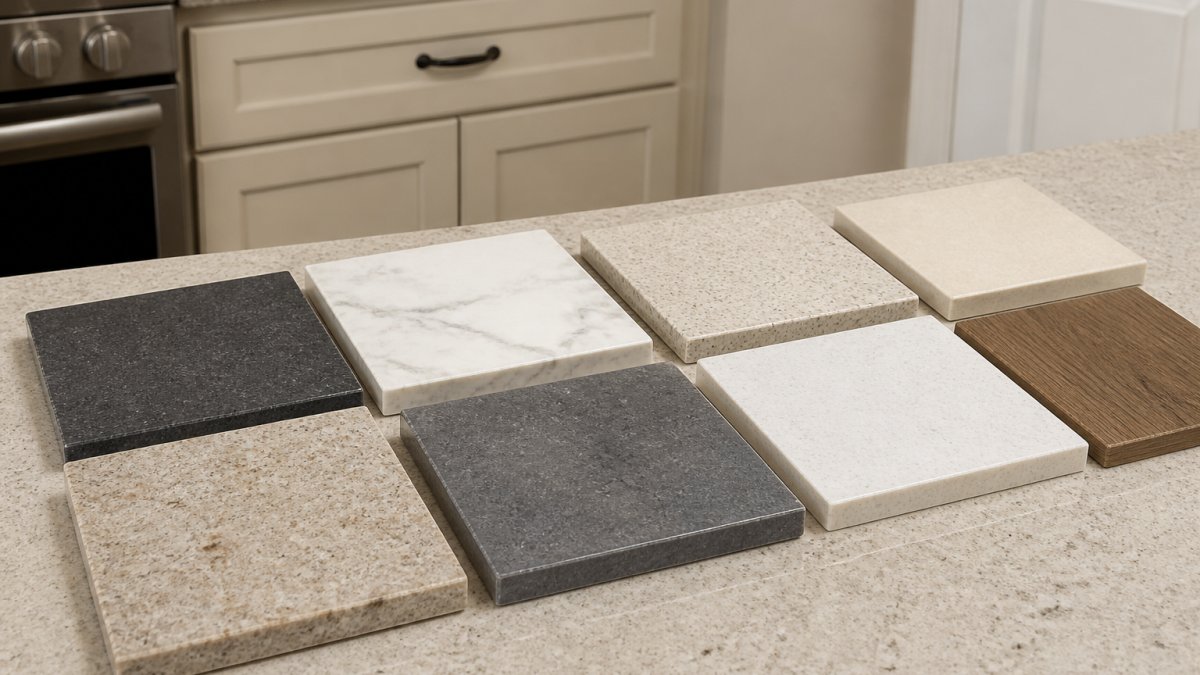
Table of Contents
- Kitchen Countertop Materials Pros and Cons at a Glance
- Granite Countertops Pros and Cons
- Quartz Countertops Pros and Cons
- Marble, Laminate, and Solid Surface: The Middle Ground
- Butcher Block Countertops Pros and Cons
- Heat, Stains, and Real Kitchen Performance
- Installed Cost and Lifecycle Value
- How to Choose the Best Kitchen Countertop Materials for Your Home
- Frequently Asked Questions
Last Updated: October 18, 2026
Kitchen Countertop Materials Pros and Cons at a Glance
Choosing kitchen countertop materials pros and cons means weighing heat, water, stains, daily wear, and upkeep cost. At SmithFamilyPaintingandProjects, we install and replace counters across Southside Virginia kitchens.
Below, we break down granite, quartz, marble, laminate, solid surface, and butcher block, then compare installed cost, lifecycle value, and real-kitchen performance.
Comparison Table: Cost, Durability, and Care
| Material | Heat Resistance | Stain Resistance | Maintenance | Best For |
|---|---|---|---|---|
| Granite | High | Good, needs sealing | Periodic sealing | Heavy use, unique look |
| Quartz | Moderate | Excellent | Low | Busy families, low upkeep |
| Marble | Moderate | Poor | High | Low-traffic showpiece areas |
| Laminate | Low | Good | Low | Tight budgets |
| Solid Surface | Low | Good | Low, repairable | Rentals, seamless sinks |
| Butcher Block | Low | Fair | High, oiling | Prep zones, warm style |
Granite Countertops Pros and Cons
Granite countertops pros and cons start with heat. Real stone shrugs off hot pots, resists scratches from knives, and each slab carries a pattern no neighbor can copy. Consumer Reports countertop buying guide notes that natural stone performs well in everyday kitchen conditions.
The tradeoffs are weight and upkeep. Expect to pay a premium, since Better Homes & Gardens lists real stone countertops in a higher per-square-foot bracket than most manufactured surfaces.
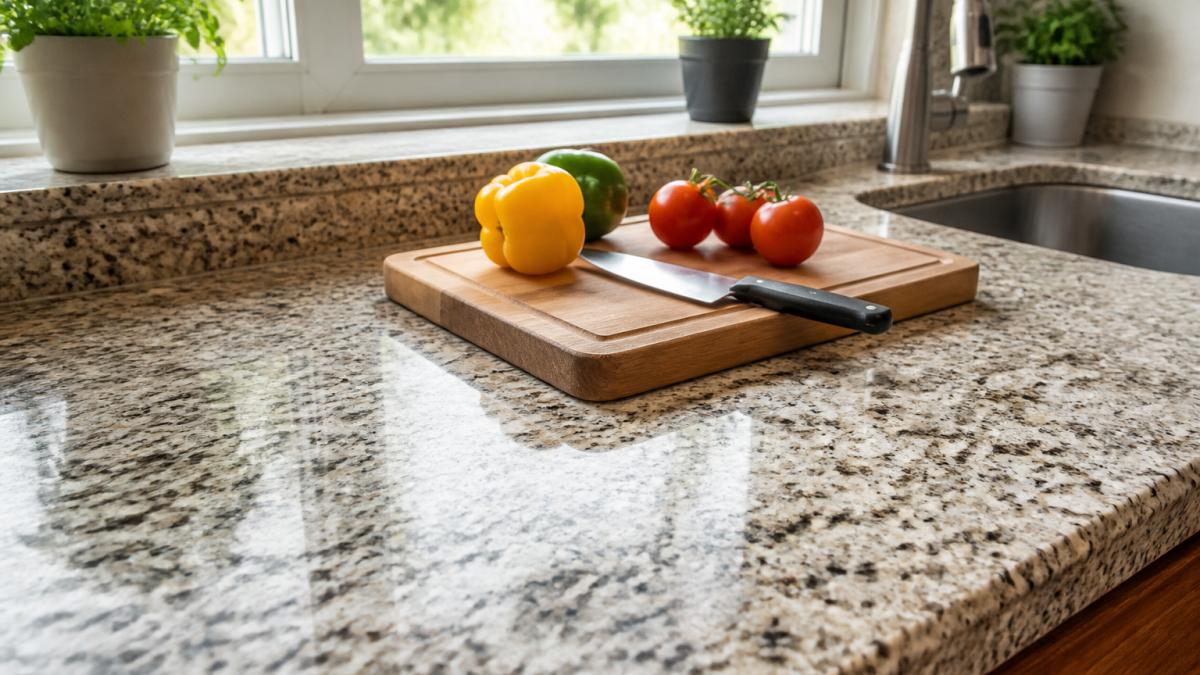 Close-up of a speckled granite kitchen countertop with a wooden cutting board and fresh vegetables, natural light from a window
Quartz Countertops Pros and Cons
Quartz countertops pros and cons hinge on one fact: engineered stone is non-porous. Quartz is ground stone mixed with resin, so it repels water and stains without sealing. Consumer Reports reports that quartz survived spills, hot pots, and knives in its testing, which matches what we see on installs.
Where quartz falls short is heat. The resin content means a hot pan straight off the burner can scorch or crack the surface, so trivets are mandatory.
Marble, Laminate, and Solid Surface: The Middle Ground
This group splits by budget and temperament. Marble rewards care, laminate rewards thrift, and solid surface rewards repairability.
Marble: Beauty With a Maintenance Bill
Marble is the most demanding surface here. It stains from wine, citrus, and oil, and etches when acidic foods sit too long; sealing helps but does not stop etching. If you love the look, put marble on an island or low-traffic run, not beside the range.
Laminate and Solid Surface: Budget and Repairability
Laminate is the affordability leader. Modern laminate resists stains and cleans easily, but it cannot take heat and its edges can chip. Solid surface, such as acrylic-based counters, sits in the middle: seams are nearly invisible and scratches can be sanded out. Neither handles a hot pot without a trivet.
Butcher Block Countertops Pros and Cons
Butcher block countertops pros and cons come down to water. Wood is warm, affordable, and forgiving on dropped dishes, and American Home Shield describes wood as versatile while noting knives and heat can damage it.
The real issue is moisture. Wood countertops need regular oiling, and standing water around sinks can swell or stain the surface. A common mistake is skipping the finish near the sink edge, where water damage starts first.
Heat, Stains, and Real Kitchen Performance
Showroom samples do not cook. The differences that matter show up when a 400°F pan comes off the burner, when lemon juice sits overnight, and when a stand mixer gets dragged across the surface twice a day.
Hot pans and heat shock
- Granite tolerates brief contact with a hot pan better than most surfaces, but thermal shock from a very hot pan on a cold slab can crack it. Trivets are still the rule.
- Quartz contains resin, and resin scorches. A hot pan set directly on quartz can leave a permanent burn mark or crack the surface, the single most common quartz complaint.
- Marble handles heat reasonably well as stone, but it is soft and etches easily, so acid, not heat, is its main enemy.
Acidic foods and staining
- Quartz, laminate, and solid surface are non-porous and resist wine, citrus, vinegar, and oil spills well. Wipe up and move on.
- Granite is porous. Sealing slows absorption, but acidic spills left standing can dull the finish. Sealing frequency matters more in a kitchen that cooks with citrus and vinegar often.
- Marble is the most acid-sensitive. Wine, lemon, and tomato will etch the surface, and etching is a dull spot sealing does not prevent.
Knives, chips, and impact
No countertop should be used as a cutting board, but real kitchens test them anyway.
- Granite and quartz resist knife scratches well. Chips happen at edges and corners, and repairs rarely blend perfectly.
- Marble scratches and chips more easily than granite because it is softer.
- Laminate can chip at edges and seams, and chips are largely permanent.
Heavy appliances and high-traffic households
A stand mixer, heavy cast-iron collection, or commercial-style range puts load and abrasion on a counter. Stone and quartz handle weight and dragging better than laminate or wood. In busy households, the practical pattern is a low-maintenance surface near the range and sink, quartz or solid surface, paired with a warmer material on the island or prep zone.
A household decision scorecard
Use this to rank materials against how you actually live. Score each row 1-5 for your household, then compare totals.
| Priority | Granite | Quartz | Marble | Laminate | Solid Surface | Butcher Block |
|---|---|---|---|---|---|---|
| Heat tolerance | 5 | 2 | 4 | 1 | 2 | 1 |
| Stain resistance | 3 | 5 | 1 | 4 | 4 | 2 |
| Scratch/chip resistance | 4 | 4 | 2 | 2 | 3 | 3 |
| Low maintenance | 3 | 5 | 1 | 4 | 4 | 1 |
| Repairability | 2 | 2 | 2 | 1 | 5 | 4 |
| Budget friendliness | 2 | 2 | 1 | 5 | 3 | 4 |
| Unique appearance | 5 | 3 | 5 | 2 | 2 | 3 |
Weight the rows by what you care about most. A household that sets hot pans down without thinking should weight heat tolerance heavily. A rental or busy family should weight low maintenance and repairability. A showpiece kitchen can weight appearance and accept the care burden.
Installed Cost and Lifecycle Value
Sticker price is the least useful number in countertop shopping. What matters is installed cost, material plus fabrication, edge profile, cutouts, tear-out, and disposal, and ownership cost over the years you keep the surface.
What actually moves an installed quote
- Material and slab yield. Natural stone is priced per slab, and a slab is a fixed size. A layout needing two slabs for a small run wastes material, and that waste is billed to you. Engineered quartz is priced per square foot, so yield is more predictable.
- Edge profile. A simple eased or square edge is the baseline. Bullnose, ogee, bevel, and mitered edges add fabrication labor, and a built-up mitered edge (to fake a thicker slab) is one of the biggest line-item jumps on a quote.
- Thickness. 2 cm and 3 cm are the common slab thicknesses. A 2 cm top usually needs a plywood subtop for support; 3 cm often does not. The subtop and extra labor show up on the invoice.
Realistic installed ranges
Treat these as planning ranges, not quotes. They reflect common residential pricing and will move with your market, slab selection, and layout complexity. For current prices or a quote, please visit our website.
| Material | Typical installed range (per sq ft) | What drives the spread |
|---|---|---|
| Laminate | $20-$50 | Edge style, backsplash integration, substrate condition |
| Butcher block | $40-$90 | Wood species, thickness, finish, sink cutout sealing |
| Solid surface | $50-$100 | Seam count, integrated sink, edge build-up |
| Quartz | $60-$120 | Brand tier, slab pattern, edge profile, cutouts |
| Granite | $50-$120 | Slab rarity, thickness, edge, seam layout |
| Marble | $70-$150+ | Slab selection, book-matching, sealing package |
A typical 30-square-foot kitchen run lands roughly in these total installed bands: laminate around $600-$1,500; butcher block around $1,200-$2,700; solid surface around $1,500-$3,000; quartz around $1,800-$3,600; granite around $1,500-$3,600; marble around $2,100-$4,500 and up.
Lifecycle cost: the number competitors skip
Purchase price is one-time; ownership cost is annual and cumulative.
- Sealing. Porous stone needs resealing, commonly every six to twelve months for granite and more often for marble in a busy kitchen, recurring time and money whether you pay a pro or DIY.
- Oiling. Butcher block needs periodic oiling, and a neglected board around a sink can need sanding and refinishing.
- Repairability. Solid surface can be sanded and buffed, so scratches and minor burns are fixable. Laminate chips are largely permanent. Granite and quartz chips can be filled by a fabricator, but color match is imperfect. Marble etching is cumulative and generally not reversible without refinishing.
A simple way to compare: divide installed cost by expected service years, then add annual care cost. A $2,400 quartz top lasting 20 years with no sealing runs about $120 per year. A $1,200 laminate top replaced after 10 years runs about $120 per year plus tear-out and disposal each cycle.
How to Choose the Best Kitchen Countertop Materials for Your Home
The best kitchen countertop materials for your home match your cooking habits, not a magazine photo. Use this checklist before you commit:
- Count how often you set hot pans down without a trivet
- Note whether you cut directly on the counter
- Decide if you will seal or oil a surface on schedule
If low maintenance tops your list, quartz or solid surface wins. If you want a one-of-a-kind look and will keep up with sealing, granite delivers. For tight budgets, laminate is the practical pick.
Frequently Asked Questions
What are the pros and cons of granite countertops?
Granite offers unique natural patterns, strong heat resistance, and high scratch resistance, making it a durable choice for busy kitchens. The downsides: it is porous and needs periodic sealing to repel water and stains, it is heavy enough to require structural review during installation, and it costs more than laminate or butcher block. Consumer Reports notes that real stone countertops commonly run in a higher per-square-foot bracket than most manufactured surfaces, so budget accordingly. Pricing depends on quantity, dates, and delivery. For current prices or a quote, please visit our website.
Which kitchen countertop material is the most durable?
Quartz and granite lead on durability. Consumer Reports testing found quartz survived spills, hot pots, and knives, and its non-porous surface resists stains and germs without sealing. Granite is similarly tough against heat and scratches but needs resealing. Laminate and butcher block are more vulnerable to heat, water, and cuts. For a household that wants low maintenance plus strength, quartz is usually the safer pick.
Which countertop materials need to be sealed?
Natural stone materials, including granite, marble, and soapstone, are porous and require sealing to repel water and stains. Butcher block and wood countertops need oiling or sealing to resist water damage. Quartz, laminate, and solid surface are non-porous and do not need sealing. Reseal stone every one to two years depending on use, and re-oil wood more often in wet zones near the sink.
Is concrete cheaper than granite?
Concrete is often pitched as a budget alternative, but installed costs vary widely by thickness, finish, and reinforcement, so it is not automatically cheaper than granite. Consumer Reports notes concrete can be tinted and textured and can include stone chips, which adds cost. Compare quotes for your specific layout rather than assuming one material wins on price. Request itemized bids that separate material, fabrication, and installation.
What is the easiest countertop material to maintain?
Quartz is the easiest to maintain day to day. Its non-porous surface repels spills and does not need sealing, so routine cleaning with mild soap and water is enough. Avoid harsh abrasive cleaners and check manufacturer guidance before using disinfecting wipes. Laminate is also simple to clean but less heat resistant. Granite and marble demand resealing and quicker cleanup of acidic foods like citrus and vinegar to prevent etching.
A countertop decision locks in years of daily use, and a rushed install shows up fast at seams and edges. SmithFamilyPaintingandProjects handles kitchen remodeling from tear-out to final caulk, backed by our Class A contractor license, bonded and insured status, and an A+ BBB rating. We offer honest communication, skilled workmanship, and full project support from start to finish. Call 434-944-4649 to get started with SmithFamilyPaintingandProjects and schedule a countertop consultation.
Frequently asked questions
What are the pros and cons of granite countertops?
Granite offers unique natural patterns, strong heat resistance, and high scratch resistance, making it a durable choice for busy kitchens. The downsides: it is porous and needs periodic sealing to repel water and stains, it is heavy enough to require structural review during installation, and it costs more than laminate or butcher block. Consumer Reports notes that real stone countertops commonly run in a higher per-square-foot bracket than most manufactured surfaces, so budget accordingly. Pricing depends on quantity, dates, and delivery. For current prices or a quote, please visit our website.
Which kitchen countertop material is the most durable?
Quartz and granite lead on durability. Consumer Reports testing found quartz survived spills, hot pots, and knives, and its non-porous surface resists stains and germs without sealing. Granite is similarly tough against heat and scratches but needs resealing. Laminate and butcher block are more vulnerable to heat, water, and cuts. For a household that wants low maintenance plus strength, quartz is usually the safer pick.
Which countertop materials need to be sealed?
Natural stone materials, including granite, marble, and soapstone, are porous and require sealing to repel water and stains. Butcher block and wood countertops need oiling or sealing to resist water damage. Quartz, laminate, and solid surface are non-porous and do not need sealing. Reseal stone every one to two years depending on use, and re-oil wood more often in wet zones near the sink.
Is concrete cheaper than granite?
Concrete is often pitched as a budget alternative, but installed costs vary widely by thickness, finish, and reinforcement, so it is not automatically cheaper than granite. Consumer Reports notes concrete can be tinted and textured and can include stone chips, which adds cost. Compare quotes for your specific layout rather than assuming one material wins on price. Request itemized bids that separate material, fabrication, and installation.
What is the easiest countertop material to maintain?
Quartz is the easiest to maintain day to day. Its non-porous surface repels spills and does not need sealing, so routine cleaning with mild soap and water is enough. Avoid harsh abrasive cleaners and check manufacturer guidance before using disinfecting wipes. Laminate is also simple to clean but less heat resistant. Granite and marble demand resealing and quicker cleanup of acidic foods like citrus and vinegar to prevent etching.