Is a Licensed Contractor Worth It? 2026 Guide
ultimate-guide · October 1, 2026 · Editorial Team

Table of Contents
- Why Licensed Contractors Matter: The Legal and Financial Reality
- Licensed vs. Unlicensed Contractors: What Changes for Your Project
- What Does Bonded and Insured Mean for Contractors
- How to Verify a Contractor License Before You Hire
- Homeowner Liability for Unlicensed Workers: What You Need to Know
- Hiring a General Contractor vs Handyman: When Each Makes Sense
- The Real Cost of Cutting Corners: Poor Workmanship and Resale Impact
- Frequently Asked Questions
Last Updated: October 1, 2026
Why Licensed Contractors Matter: The Legal and Financial Reality
A licensed contractor brings accountability to your home project that an unlicensed worker simply cannot match. The difference isn't just paperwork, it's the legal framework that protects you when something goes wrong.
When you hire someone without a license, you lose the ability to file complaints with your state's contractor licensing board. You have no regulatory agency backing your claim if the work fails. More importantly, you may be personally liable if that worker gets injured on your property. Most homeowners don't realize this until it's too late.
SmithFamilyPaintingandProjects operates as a licensed, bonded, and insured Class A contractor. This licensing requirement exists because states recognize that home improvement work carries real risk. A licensed contractor has passed exams, maintained insurance, and submitted to ongoing regulatory oversight. That framework exists to protect you.
The legal protection extends beyond injury liability. Many states require permits for specific work, kitchen renovations, electrical changes, structural modifications. If an unlicensed contractor does unpermitted work and an inspector discovers it during a future sale or insurance claim, you may be forced to pay for remediation. The contractor has disappeared. You own the problem.
Licensed vs. Unlicensed Contractors: What Changes for Your Project
The practical differences between a licensed contractor and an unlicensed operator affect every phase of your project, from the initial estimate through final inspection.
A licensed contractor carries liability insurance and workers' compensation coverage. If a worker is injured during the job, that insurance covers medical costs and lost wages, not your homeowner's policy. An unlicensed contractor operating without insurance means you're exposed. Your homeowner's insurance may deny a claim if an uninsured worker is injured on your property, leaving you personally liable for medical bills and legal fees.
Licensed contractors are required to pull permits for work that triggers code compliance requirements. This seems like extra cost and delay, but it's actually protection. The permit process ensures an inspector reviews the work before you pay in full. If something doesn't meet code, you know before the contractor leaves. With unlicensed work, you discover problems months or years later when they're exponentially more expensive to fix.
Scope of work definition differs significantly. A licensed general contractor provides detailed written contracts specifying what's included, what costs extra, and what happens if conditions change. Unlicensed operators often work on handshake agreements, leading to disputes about what was promised.
| Factor | Licensed Contractor | Unlicensed Operator |
|---|---|---|
| Insurance coverage | Required liability & workers' comp | Usually none |
| Permit compliance | Pulls required permits, passes inspection | Avoids permits entirely |
| Written contract | Detailed scope, pricing, timeline | Informal agreement |
| Recourse if problems arise | File complaint with licensing board | Limited legal options |
| Warranty on work | Often provided in writing | Verbal promises only |
| Background verification | Public license record available | No verification possible |
What Does Bonded and Insured Mean for Contractors
Being bonded and insured are two separate protections that work together to safeguard your project investment.
Bonding is a financial guarantee. A contractor bond promises that if the contractor fails to complete the job or violates the terms of your agreement, the bonding company will cover your losses up to the bond amount. Think of it as insurance for the homeowner. If a contractor takes your deposit and disappears, the bond covers your financial loss. This protection only exists if the contractor has actually obtained a bond.
Insurance, specifically liability insurance, covers property damage and injury claims. If a worker accidentally damages your home during the project, liability insurance pays for repairs. If someone is injured on the job, workers' compensation insurance covers medical costs. A contractor without insurance means you're absorbing these risks personally.
The bonding and insurance requirements vary by state and by license class. Some states require contractors to maintain minimum bond amounts; others leave it optional. A reputable contractor maintains both regardless of the legal minimum because it demonstrates professionalism and protects their business.
When you hire a licensed contractor, you can verify their bonding and insurance status through the licensing board or by requesting a certificate of insurance. Ask to see it. A legitimate contractor will provide proof immediately. If they hesitate or claim they don't have it, walk away.
How to Verify a Contractor License Before You Hire
Verification takes minutes and protects you from fraud and incompetence. Most states operate free online contractor license lookup systems.
Start by getting the contractor's license number. A legitimate contractor will provide it without hesitation. Then visit your state's contractor licensing board website. Search for the license number. The results will show the contractor's name, license class, license status (active or inactive), and any disciplinary history. If the license is expired or shows violations, stop there.
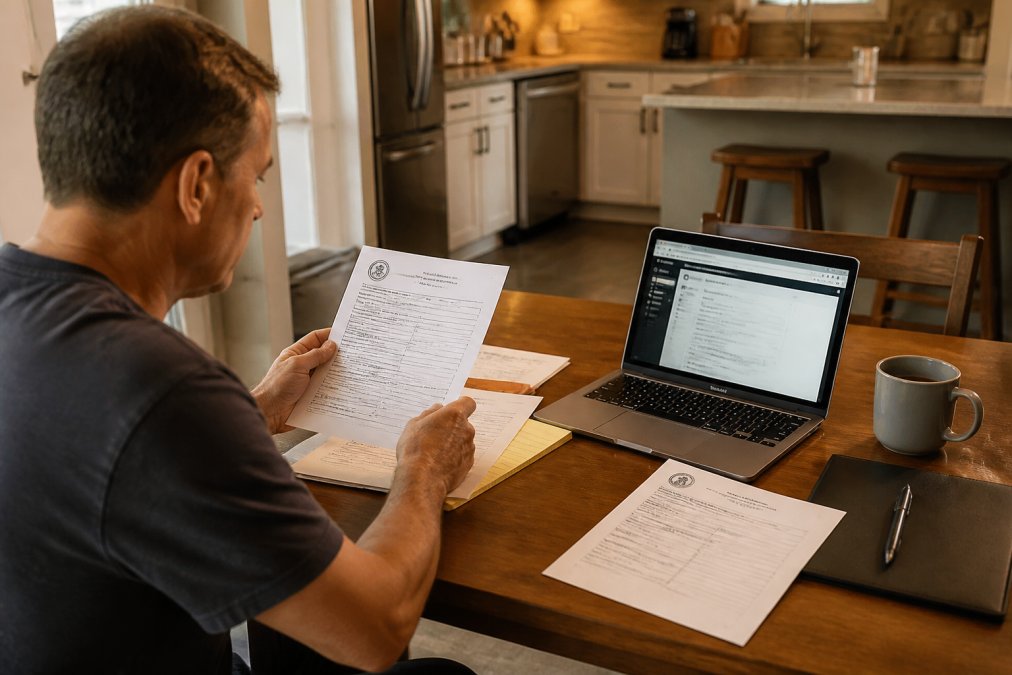 Homeowner reviewing contractor credentials and license documents at a kitchen table with a laptop and paperwork spread out, comparing information from state licensing board website
Next, request a certificate of insurance. This document shows the contractor's current liability and workers' compensation coverage. Call the insurance company listed on the certificate to confirm it's valid. Contractors sometimes present outdated certificates. Verification takes one phone call.
Check the Better Business Bureau rating and reviews on platforms like HomeAdvisor and Angi. Look for patterns. One negative review might be unfair; multiple complaints about the same issue indicate a real problem. Pay attention to how the contractor responds to criticism. A professional contractor addresses concerns professionally.
Ask for references from recent projects similar to yours. Call at least three. Ask specific questions: Did the contractor start and finish on schedule? Were there surprise costs? How was communication throughout the project? Would you hire them again? Real customers provide honest feedback.
Finally, verify the contractor's business registration with your state's Secretary of State office. This confirms the business entity is legitimate and registered to operate in your state.
Homeowner Liability for Unlicensed Workers: What You Need to Know
Many homeowners assume that hiring an unlicensed contractor protects them legally. It's the opposite. You assume greater liability when you hire someone without a license.
If an unlicensed worker is injured on your property, your homeowner's insurance may deny the claim because the person wasn't covered under a legitimate business arrangement. You become personally liable for medical bills, rehabilitation costs, and potentially lost wages. These bills can easily reach six figures for a serious injury.
Your homeowner's policy typically excludes coverage for injuries to workers hired outside a licensed contractor arrangement. The worker may sue you directly. Even if you win the lawsuit, legal defense costs can exceed tens of thousands of dollars.
Beyond injury liability, there's the issue of unpermitted work. If an unlicensed contractor performs work that requires a permit and doesn't pull one, you own the problem. During a future home sale, an inspector discovers the unpermitted work. The sale may fall through, or you're forced to pay for remediation and retroactive permits. The contractor is long gone.
Some jurisdictions impose fines on homeowners who knowingly hire unlicensed contractors. A few states require permits to be pulled before work begins; if an unlicensed contractor starts work without permits, you could face fines even if you didn't know the permit was required.
The legal recourse available to you also changes. If a licensed contractor does poor work, you file a complaint with the licensing board. If an unlicensed contractor does poor work, you have limited options. You can sue, but you're paying attorney fees upfront with no guarantee of recovery. A licensing board complaint costs nothing and carries regulatory weight.
Hiring a General Contractor vs Handyman: When Each Makes Sense
The distinction between a general contractor and a handyman is often blurred, but it matters legally and financially.
A general contractor holds a state license, carries bonding and insurance, and is authorized to oversee complex projects involving multiple trades.
The Real Cost of Cutting Corners: Poor Workmanship and Resale Impact
Hiring an unlicensed contractor to save money often costs far more in remediation, resale complications, and legal liability.
Frequently Asked Questions
What are the primary risks of hiring an unlicensed contractor?
Unlicensed contractors expose you to property damage liability, poor workmanship with no legal recourse, and potential injury claims if someone gets hurt on your property. You also lose protection under building codes and regulations. If the work fails, you cannot file a mechanic's lien claim or recover damages through the contractor license board. Additionally, unpermitted work can affect your home's resale value and create issues during inspections.
How does a Class A contractor license protect homeowners?
A Class A license means the contractor has met state bonding, insurance, and experience requirements. This provides financial protection through bonding (covers unpaid subcontractors and suppliers), liability insurance (covers property damage and injuries), and regulatory oversight. Licensed contractors are accountable to the contractor license board and subject to inspections. If disputes arise, you have legal recourse and can file complaints that trigger investigations.
Can I sue an unlicensed contractor for poor workmanship?
Suing an unlicensed contractor is significantly harder and often unsuccessful. Many states prohibit unlicensed contractors from filing lawsuits to collect payment, which limits your legal options. You lose access to mechanic's lien protections and contractor board dispute resolution. Court cases are expensive and time-consuming. Licensed contractors carry liability insurance and bonding that protect you; unlicensed workers typically carry neither, meaning you bear the financial burden of fixing defects.
What happens if an unlicensed worker gets injured on my property?
You could face serious liability. If an unlicensed worker is injured, they may sue your homeowner's insurance or pursue a personal injury claim directly against you. Your homeowner's policy typically excludes coverage for hired workers, leaving you personally responsible for medical bills, lost wages, and legal fees. Licensed contractors carry workers' compensation insurance that covers these costs. This single scenario can result in tens of thousands of dollars in out-of-pocket expenses.
Frequently asked questions
What are the primary risks of hiring an unlicensed contractor?
Unlicensed contractors expose you to property damage liability, poor workmanship with no legal recourse, and potential injury claims if someone gets hurt on your property. You also lose protection under building codes and regulations. If the work fails, you cannot file a mechanic's lien claim or recover damages through the contractor license board. Additionally, unpermitted work can affect your home's resale value and create issues during inspections.
How does a Class A contractor license protect homeowners?
A Class A license means the contractor has met state bonding, insurance, and experience requirements. This provides financial protection through bonding (covers unpaid subcontractors and suppliers), liability insurance (covers property damage and injuries), and regulatory oversight. Licensed contractors are accountable to the contractor license board and subject to inspections. If disputes arise, you have legal recourse and can file complaints that trigger investigations.
Can I sue an unlicensed contractor for poor workmanship?
Suing an unlicensed contractor is significantly harder and often unsuccessful. Many states prohibit unlicensed contractors from filing lawsuits to collect payment, which limits your legal options. You lose access to mechanic's lien protections and contractor board dispute resolution. Court cases are expensive and time-consuming. Licensed contractors carry liability insurance and bonding that protect you; unlicensed workers typically carry neither, meaning you bear the financial burden of fixing defects.
What happens if an unlicensed worker gets injured on my property?
You could face serious liability. If an unlicensed worker is injured, they may sue your homeowner's insurance or pursue a personal injury claim directly against you. Your homeowner's policy typically excludes coverage for hired workers, leaving you personally responsible for medical bills, lost wages, and legal fees. Licensed contractors carry workers' compensation insurance that covers these costs. This single scenario can result in tens of thousands of dollars in out-of-pocket expenses.