Is Flat Paint Worth It for Hallways?
comparison · November 2, 2026 · Editorial Team
Last Updated: November 1, 2026
Quick Summary
Is flat paint worth it for hallways? Yes, if the hallway is low-traffic and the walls have surface imperfections to hide. No, if it's a busy corridor where hands, bags, and furniture constantly brush the walls, since flat paint scuffs easily and cleans delicately.
- Flat paint hides dents, patches, and drywall repair spots better than any other sheen.
- Eggshell adds a subtle luster that cleans up far better than flat paint.
- Modern washable flat paints use higher binder-to-pigment ratios so stains sit on the surface.
- Map hallways into zones: eggshell on the 0-48 inch contact zone, flat above it.
- Check the product's technical data sheet for scrub cycles under ASTM D2486 before buying.
Table of Contents
- The Short Answer: When Flat Paint Works in a Hallway
- Flat vs. Eggshell Paint for Walls: What Actually Changes
- Is Flat Paint Washable? What Modern Formulas Changed
- The Paint Sheen That Hides Imperfections Best
- Best Paint Finish for High-Traffic Areas: Scuff Resistance and Cleaning
- The Hallway Lighting Factor: How Sheen Changes What You See
- Quick Fixes: DIY Repair and Touch-Ups on Flat Paint
- Choosing Your Hallway Finish With a Local Painting Contractor
- Frequently Asked Questions
The Short Answer: When Flat Paint Works in a Hallway
Is flat paint worth it for hallways? Yes, if the hallway is low-traffic and the walls have surface imperfections to hide. No, if it's a busy corridor where hands, bags, and furniture constantly brush the walls.
Flat paint is a low-sheen interior finish that absorbs light rather than reflecting it, producing a velvety, uniform surface. That light absorption is exactly why it hides wall texture so well, and exactly why it scuffs so easily.
Where Flat Paint Wins in a Hallway
- Hiding surface imperfections. Dents, patches, and drywall repair spots disappear under a flat finish.
- A velvety, uniform look. No glare means no flashing, so the wall reads as one clean color.
- Great for ceilings and accent walls. Low light reflection suits spaces you want to feel calm.
Where It Falls Short
- Scuff resistance is poor. Shoes, bags, and furniture mark flat walls fast.
- Cleaning is delicate. Scrubbing a standard flat paint can burnish or dull the paint film.
- Touch-ups can flash. A fresh patch may dry slightly differently from the aged wall.
Flat vs. Eggshell Paint for Walls: What Actually Changes
The flat vs. eggshell paint for walls decision comes down to sheen level. Flat sits near zero on the gloss scale; eggshell adds a subtle, low-sheen luster that reflects a little light and cleans up far better.
| Finish | Sheen Level | Scuff Resistance | Hides Imperfections | Best For |
|---|---|---|---|---|
| Flat | Lowest | Low | Best | Low-traffic walls, ceilings |
| Matte | Low | Moderate | Very good | Bedrooms, dining rooms |
| Eggshell | Low-medium | Good | Moderate | Hallways, family rooms |
| Satin | Medium | High | Fair | Kitchens, baths, trim |
Eggshell's slight sheen makes it more forgiving of cleaning and everyday contact. Flat's advantage is visual: it makes a wall look seamless. For a busy hallway, eggshell usually wins on durability.
Is Flat Paint Washable? What Modern Formulas Changed
The old rule, flat paint is hands-off, is now only half true. Traditional flat finishes used low binder levels and high pigment volume concentration (PVC), which left a porous, chalky film that grabbed dirt and burnished the moment you scrubbed it. Modern washable flat paints changed the chemistry, which is one reason flat may be worth reconsidering for a hallway.
What actually changed in the formula
- Higher binder-to-pigment ratio. More resin encapsulates the pigment particles, so the film is tighter and less porous. That means stains sit on the surface instead of soaking in.
- Scrubbable and ceramic-infused resins. Several manufacturers now build in cross-linking acrylics or ceramic microspheres that raise scrub resistance without raising sheen. The finish stays matte but the film behaves more like an eggshell under a damp cloth.
- Stain-blocking and burnish-resistant additives. These reduce the shiny 'polished' spot that appears when a standard flat is rubbed too hard.
How to read the washability claims on the label
Manufacturers often test scrub resistance under ASTM D2486. Specific cycle counts and sheen values are listed on each product's technical data sheet (TDS), not the front of the can, so check the manufacturer's site or ask for the TDS before you buy.
Washable is not scrubbable, the practical distinction
A washable flat handles a damp microfiber cloth, mild dish soap, and light pressure. It is not designed for abrasive pads, trisodium phosphate (TSP) substitutes at full strength, or repeated hard scrubbing. Push either one and you can still dull or burnish the film. The working rule: blot and lift first, wash with a mild solution second, and only escalate to a scrub sponge on a hidden test patch.
Product-level reality check
For a hall that takes daily bag and shoe contact, a scuff-resistant matte or eggshell is generally the safer bet, see the high-traffic section below.
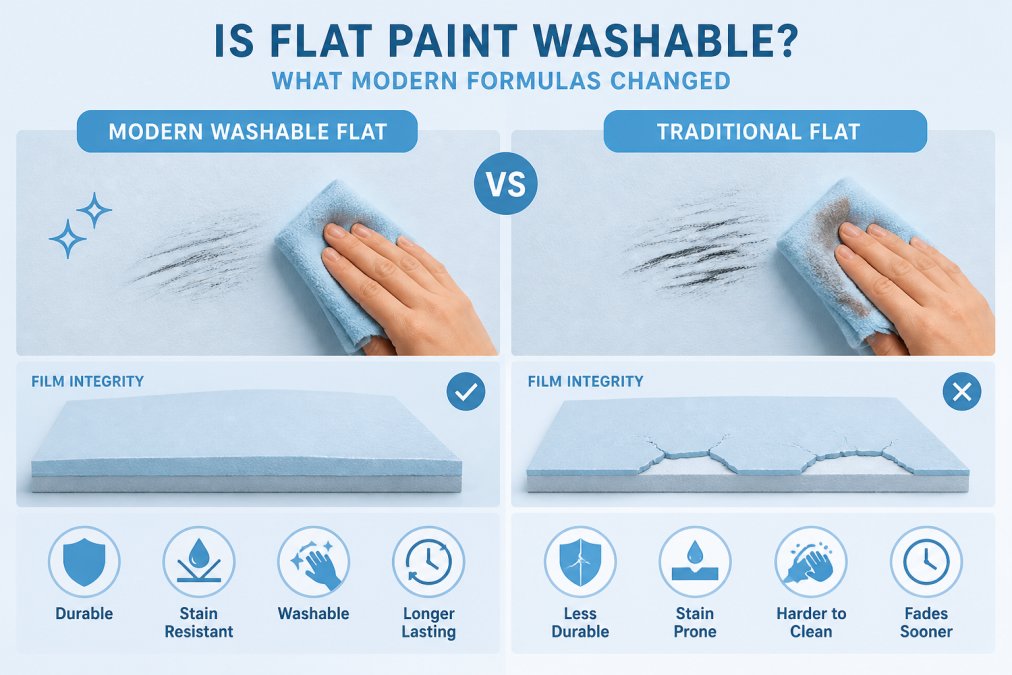 Diagram comparing scrub resistance of modern washable flat paint versus traditional flat paint for hallways.
The Paint Sheen That Hides Imperfections Best
Flat paint is the paint sheen that hides imperfections best. Its low light reflection means shadows don't catch on bumps, dents, or patch lines the way they do on a glossier surface.
Wall texture is the reason. Older homes often have uneven drywall, patched holes, or slightly wavy plaster. A flat finish softens all of it.
Best Paint Finish for High-Traffic Areas: Scuff Resistance and Cleaning
Eggshell or a scuff-resistant matte is the best paint finish for high-traffic areas, but 'high-traffic' is not one condition. A hallway has zones, and the finish decision should follow the zone rather than the whole corridor.
Map the hallway into traffic zones
- Contact zone (0-48 inches from the floor). This is where shoes, bags, pet leashes, and furniture corners hit. It takes the most abuse and is where flat fails fastest.
- Hand and shoulder zone (48-60 inches). Light contact from hands, coats, and carried items. Moderate risk.
- Upper wall and ceiling line. Rarely touched. Flat is perfectly serviceable here and gives the calmest look.
A practical compromise many painters use: eggshell or scuff-resistant matte on the contact zone, flat or matte above it, with the break hidden at a chair rail or a natural sightline. You keep the flat aesthetic where the eye rests and put durability where the abuse happens.
Why scuff-resistant finishes work
Scuff resistance comes from film toughness, not sheen alone. Cross-linking acrylic binders and ceramic or urethane additives raise the film's resistance to abrasion and to the black rubber transfer that shoes and furniture leave behind. A scuff-resistant matte can look nearly flat while cleaning up like a much glossier finish. That is the trade you are buying.
Product comparison for a busy corridor
- Benjamin Moore Scuff-X. Scuff-resistance formulations are one option to consider for a busy corridor; ask for the product data sheet to confirm available sheens and performance.
Cleaning protocol that protects the film
- Dry-first. Lift loose dirt and scuff transfer with a clean microfiber cloth before any moisture.
- Mild solution. A few drops of dish soap in warm water; wring the cloth nearly dry.
- Blot, don't scrub. Work from the edge of the mark inward with light pressure.
- Rinse and dry. Remove soap residue with a damp cloth, then dry the wall to avoid streaks.
- Escalate only on a test patch. A melamine sponge is a last resort and can dull even scuff-resistant films.
The honest trade-off
A quality eggshell or scuff-resistant matte typically costs more per gallon than standard flat. For many high-traffic hallways, that trade-off may be worth considering.
The Hallway Lighting Factor: How Sheen Changes What You See
Hallway lighting decides how much a finish's sheen shows.
Here's the practical rule: the more direct light hits a wall, the more sheen and texture show.
Match the finish to the light. Bright hallway with lots of reflection? Lean matte or flat. Dim hallway with soft, indirect light? You can get away with eggshell and still enjoy its easier cleaning.
Quick Fixes: DIY Repair and Touch-Ups on Flat Paint
Flat paint is one of the easier finishes to touch up, because its low sheen hides the slight color shift between old and new paint. The trick is matching the paint and feathering the edges so the repair doesn't flash.
A simple touch-up routine:
- Clean the scuff with a damp cloth and mild soap, then let it dry fully.
- Fill any dents with lightweight spackle, sand smooth, and wipe off dust.
- Apply primer to bare patches so the topcoat bonds evenly.
Watch out: touching up with a different sheen or a roller with a heavy nap can leave a visible patch, even on flat paint. Professional drywall repair may be the better route when a hallway needs a real fix rather than a spot cover.
Choosing Your Hallway Finish With a Local Painting Contractor
The right finish depends on your hallway's traffic, light, and wall condition, and a contractor can read all three in person. If you're weighing flat against eggshell and want a straight answer, talk to a pro who paints these spaces every week.
SmithFamilyPaintingandProjects is a licensed, bonded, and insured Class A contractor serving homeowners across Southside Virginia. You can review our interior and exterior painting and wall coverings to see what we offer locally.
Frequently Asked Questions
Is flat paint a good choice for hallways?
It can be, with one condition: use a modern washable flat or matte formula rather than a traditional builder-grade flat. Standard flat paint hides wall texture and drywall flaws well and gives a velvety finish, but it scuffs easily and does not scrub clean. A scuff-resistant matte can keep the low-sheen look while standing up to daily traffic. Pricing depends on quantity, sheen, and product; check our website for current prices or a quote.
Is flat paint washable, or does it stain permanently?
Traditional flat paint is not truly washable. Its low binder content leaves a porous film, so scrubbing can burnish the surface or take the color off. Modern washable flat paints use higher binder content and tighter film formation, which lets you wipe light marks with a damp cloth and mild soap. Deep stains and shoe scuffs still need gentle touch-up rather than aggressive scrubbing, so test any cleaning agent on a hidden spot first.
What paint sheen hides imperfections best?
Flat and matte finishes hide surface imperfections best because they absorb light instead of reflecting it. Gloss and satin bounce light across the wall, which highlights drywall seams, nail pops, and patched texture. If your hallway walls are older or have had drywall repair, a matte finish is the most forgiving choice. Just pair it with a quality primer and proper surface preparation so the paint film stays uniform.
Is eggshell or matte paint better for a hallway?
Eggshell has a slight sheen and a harder, more scrubbable paint film, which suits busy hallways with kids, pets, or furniture moving through. Matte gives a softer, flatter look and hides wall texture better but shows scuffs more readily unless you choose a high-performance matte. For most households, eggshell sheen on the lower half and matte on upper walls balances durability with a low-sheen aesthetic. Ask a painter to test both on your actual lighting before committing.
What paint finish is best for high-traffic areas?
For high-traffic areas, a finish with real scuff resistance and washability matters more than the label. Eggshell and satin are the standard picks because their tighter paint film resists scuff marks and cleaning. If you want a low-sheen look, choose a matte product built for traffic and confirm its scrub and burnish performance on the manufacturer's data sheet. Avoid standard flat paint on stairwells, hallway corners, and anywhere hands and shoes regularly contact the wall.
Deciding on a hallway finish shouldn't feel like a gamble. If you want a finish that looks right and holds up, SmithFamilyPaintingandProjects can help you choose and apply it with care. Get started with SmithFamilyPaintingandProjects and give your hallway a finish built to last. Call 434-944-4649 to talk through your project.

Frequently asked questions
Is flat paint a good choice for hallways?
It can be, with one condition: use a modern washable flat or matte formula rather than a traditional builder-grade flat. Standard flat paint hides wall texture and drywall flaws well and gives a velvety finish, but it scuffs easily and does not scrub clean. A scuff-resistant matte can keep the low-sheen look while standing up to daily traffic. Pricing depends on quantity, sheen, and product; check our website for current prices or a quote.
Is flat paint washable, or does it stain permanently?
Traditional flat paint is not truly washable. Its low binder content leaves a porous film, so scrubbing can burnish the surface or take the color off. Modern washable flat paints use higher binder content and tighter film formation, which lets you wipe light marks with a damp cloth and mild soap. Deep stains and shoe scuffs still need gentle touch-up rather than aggressive scrubbing, so test any cleaning agent on a hidden spot first.
What paint sheen hides imperfections best?
Flat and matte finishes hide surface imperfections best because they absorb light instead of reflecting it. Gloss and satin bounce light across the wall, which highlights drywall seams, nail pops, and patched texture. If your hallway walls are older or have had drywall repair, a matte finish is the most forgiving choice. Just pair it with a quality primer and proper surface preparation so the paint film stays uniform.
Is eggshell or matte paint better for a hallway?
Eggshell has a slight sheen and a harder, more scrubbable paint film, which suits busy hallways with kids, pets, or furniture moving through. Matte gives a softer, flatter look and hides wall texture better but shows scuffs more readily unless you choose a high-performance matte. For most households, eggshell sheen on the lower half and matte on upper walls balances durability with a low-sheen aesthetic. Ask a painter to test both on your actual lighting before committing.
What paint finish is best for high-traffic areas?
For high-traffic areas, a finish with real scuff resistance and washability matters more than the label. Eggshell and satin are the standard picks because their tighter paint film resists scuff marks and cleaning. If you want a low-sheen look, choose a matte product built for traffic and confirm its scrub and burnish performance on the manufacturer's data sheet. Avoid standard flat paint on stairwells, hallway corners, and anywhere hands and shoes regularly contact the wall.