How to Remove Water Stains From Hardwood Floors Naturally
how-to · October 16, 2026 · Editorial Team
Table of Contents
- How to Tell What Kind of Water Stain You Are Dealing With
- How to Remove White Water Stains From Wood
- How to Remove Dark Water Stains From Wood
- Baking Soda for Water Stains on Wood: What Works and What Does Not
- How to Dry Water-Damaged Hardwood Floors Before You Treat Stains
- When Natural Methods Stop Working and You Need a Professional
- Frequently Asked Questions
Last Updated: October 15, 2026
How to Tell What Kind of Water Stain You Are Dealing With
Learning how to remove water stains from hardwood floors naturally starts with identifying the stain.
At SmithFamilyPaintingandProjects, we have walked into many Southside Virginia homes where a small drip turned into a floor problem. Whether you can fix it yourself depends on the color and depth.
A water stain is discoloration caused by moisture sitting on or under the finish. The two main types need different treatment.
White Water Stains vs. Dark Water Stains
White water stains sit on the surface of the finish, the moisture never soaked into the wood. They look cloudy, milky, or pale, like a fog under the clear coat, and are the easiest to fix with household ingredients.
Dark water stains are different. When the mark turns brown, gray, or black, moisture has soaked through the finish into the wood fibers, the longer the water sat, the darker it gets.
Here is the quick test:
- White or milky → moisture on the finish → natural methods usually work
- Brown or gray → moisture under the finish → needs deeper treatment
- Black → wood fiber damage → sanding or professional help
Surface Stain or Moisture Under the Finish?
Run your fingertip across the mark. Smooth surface with color on top means a surface stain; rough, raised, or swollen wood means moisture has pushed under the finish into the grain.
A common mistake is treating a swollen board like a surface mark. Rubbing oil on raised wood does nothing. The board needs to dry first.
How to Remove White Water Stains From Wood
White water stains on wood usually come out with items already in your kitchen. Work gently, in the direction of the grain.
Here is the method we recommend, step by step:
- Mix equal amounts of white vinegar and olive oil in a small bowl.
- Dip a soft cloth into the mixture. Do not soak it.
- Rub the stain with light pressure, always following the wood grain.
- Wipe clean with a dry cloth.
- Let it dry fully before judging the result.
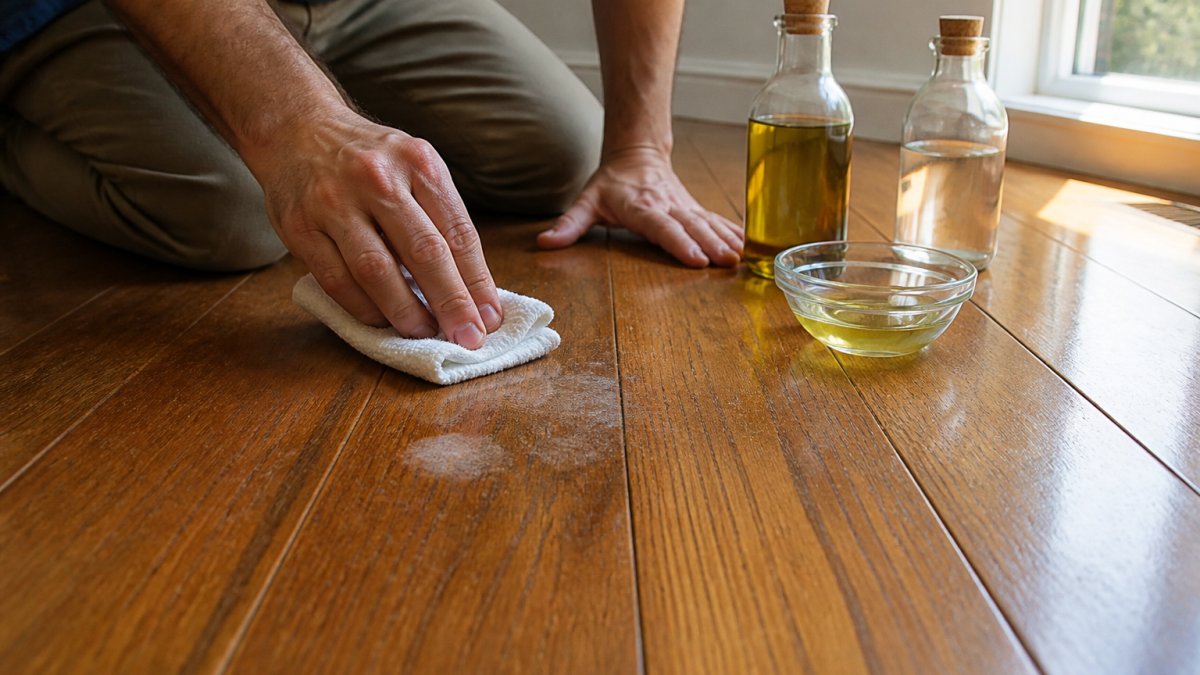 Close-up of a person's hands applying a white vinegar and olive oil mixture with a soft cloth to a white water stain on a hardwood floor, small bowl visible nearby, warm natural window light
If vinegar and oil do not lift it, try a paste of baking soda and a few drops of water. Apply to the mark, let it sit a few minutes, then wipe along the grain.
Most white stains fade within one or two rounds. If the mark stays after three attempts, stop, the stain has soaked deeper than it looks.
How to Remove Dark Water Stains From Wood
Dark water stains need more patience and sometimes sanding. No household mixture pulls black stains out of wood fibers once they have set, but "dark" covers a wide range, the right approach depends on how far the moisture traveled and what finish is on your floor.
First, Confirm the Stain Is Actually Dark
Before treating anything, look at the mark under bright, angled light. A brown ring that looks black in a dim room is often just a concentrated surface stain. A true black stain reads flat and matte with blurred or raised grain; if the grain is crisp and the color sits on top, treat it as a brown stain first.
Match the Method to the Finish
Natural treatments behave differently on different finishes. Using the wrong one can dull, cloud, or strip the surface even if the stain fades.
- Polyurethane and other film finishes (most modern factory-finished and site-finished floors): Vinegar and water is generally safe at a 1:1 dilution. Wipe, do not soak. Avoid oil-based polishes and waxes here, because they can leave a smeary film that traps dirt.
- Waxed floors: Skip vinegar. The acid dulls wax over time. A paste of baking soda and a few drops of mineral oil is gentler, and you will need to re-wax the spot afterward.
- Oiled or hardwax-oiled floors: Do not use vinegar or baking soda. These finishes are designed to be refreshed with more oil, not cleaned with acids or abrasives. A dedicated wood soap at the manufacturer's dilution, followed by a re-oil of the spot, is the natural route.
If you do not know your finish, test in a closet, behind furniture, or under a floor vent: apply the mixture, wait ten minutes, wipe, and check for dulling or color change.
The Gentle-First Sequence
Work through these in order. Stop as soon as the stain lifts.
- Vinegar and water (1:1). Apply with a soft cloth, wipe along the grain, let it dwell no more than a minute, then wipe dry. This lightens brown marks that have not fully soaked in.
- Baking soda paste. Mix three parts baking soda with one part water. Apply only to the stain, let it sit five to ten minutes, then wipe along the grain. This works on surface-level dark marks but rarely on deep black stains.
- Lemon oil or a commercial wood cleaner. For a stubborn brown ring, a small amount of lemon oil can help break down residue without dulling the finish. Test first.
- Oxalic acid (with caution). The traditional natural remedy for dark tannin stains, sold as wood bleach. It is a mild acid that can lighten the wood itself if left too long. Follow the package dilution, apply only to the stain, neutralize with a baking soda and water wipe, and rinse. Do not use it on oiled or waxed floors.
If two rounds of any single method do not work, move to the next method or stop.
When Sanding Is the Honest Answer
When natural methods stop working, sanding is the next step. Use fine-grit sandpaper (220-grit is a reasonable starting point for a spot repair) and work lightly with the grain, you are removing the stained finish layer, not the wood.
A few practical notes:
- Feather the edges of the sanded area so you do not leave a visible dip.
- Vacuum the dust, then wipe with a barely damp cloth and dry immediately.
- Reapply a matching finish to the bare spot. An unmatched sheen will be more noticeable than the original stain.
Stop-and-Escalate Signs
Put the sandpaper down and call a pro if you see any of these:
- The stain is black and survives a light sanding.
- The board feels soft, spongy, or raised after drying.
- The stain keeps returning after treatment.
These signs mean the moisture reached the wood fibers or the subfloor, and no natural method will fix that.
Baking Soda for Water Stains on Wood: What Works and What Does Not
Baking soda is one of the most recommended natural cleaners for water marks, but it only works on certain stains.
What it works on: light brown marks, surface rings, and fresh white stains.
What it does not fix: black stains, swollen boards, or any mark where moisture has reached the wood fibers.
The right way to use it:
- Mix three parts baking soda with one part water to form a paste
- Apply only to the stain, not the whole board
- Let it sit five to ten minutes
If two rounds do not work, more baking soda will not help.
How to Dry Water-Damaged Hardwood Floors Before You Treat Stains
Treating a stain before the floor is dry is the single biggest mistake we see. If moisture is still in the wood, any natural treatment will fail and the stain may spread. "Dry" is not a feeling, it is a condition you can check.
Step 1: Stop the Source First
Drying a floor while water is still entering it is wasted effort. Before you run a single fan, find and stop the source.
- Plumbing leak: Shut off the supply valve, then call a plumber. A slow drip under a sink or behind a refrigerator can run for weeks before it shows on the floor.
- Appliance leak: Dishwashers, washing machines, and water heaters are common culprits. Pull the appliance out if you can and check the supply line and drain pan.
- Spill or overflow: Blot immediately. The longer water sits, the deeper it travels.
If you cannot find the source, assume it is still active and treat the drying as temporary until a professional inspects.
Step 2: Remove Standing Water and Dry the Room
- Wipe up standing water with dry towels or a wet vacuum. Change towels often, a saturated towel just redistributes moisture.
- Run fans and a dehumidifier in the room. Aim the fans across the floor surface, not straight down.
- Open windows if outdoor humidity is low; otherwise keep them closed and rely on the dehumidifier.
- Keep the room warm. Wood dries faster in warm, moving air.
- Give it 24 to 48 hours for a small spill, longer for a leak that ran for days.
Step 3: Diagnose, Surface Stain or Moisture Beneath the Finish?
This step decides whether a natural treatment will work at all.
Run your fingertip across the mark. Then check these signs:
- Smooth surface, color on top: Surface stain. The moisture sat on the finish and never penetrated. Natural methods usually work.
- Slightly rough or dull finish: The finish may have absorbed moisture. Dry fully, then treat gently.
- Raised, swollen, or cupped boards: Moisture reached the wood. Do not treat the stain yet, the board needs to dry, and if it does not flatten, it needs repair.
A simple moisture meter from most hardware stores can confirm what your hand cannot. Readings above roughly 12 percent suggest moisture is still present, compare the stained board to a dry one, since the difference matters more than the absolute number.
Step 4: Only Then Treat the Stain
Once the wood feels dry, the boards sit flat, and a moisture reading is close to that of dry boards nearby, you can treat the stain. If a board still feels raised or soft after two days of drying, bring in a professional rather than keep rubbing.
Preventing the Next Stain
Once the floor is dry and the stain is treated, prevent the next one:
- Fix the leak or appliance issue that caused it, and check the same spot monthly.
- Use a dehumidifier in basements and rooms with poor airflow.
- Wipe up spills within a few minutes.
For guidance on moisture control in your home, the U.S. Environmental Protection Agency's mold and moisture guide is a solid starting point.
When Natural Methods Stop Working and You Need a Professional
Natural fixes handle surface stains well. They cannot fix wood that has soaked through, boards that have cupped, or damage from a slow leak that ran for weeks.
Call a professional when you see:
- Black stains that survive sanding
- Boards that are warped, cupped, or lifting
- A musty smell, which points to mold under the floor
Water that sits for more than a day or two can reach the subfloor, that is a repair job, not a cleaning job. At SmithFamilyPaintingandProjects, we handle flooring repair and full replacement across the area and offer 24/7 emergency service when water damage cannot wait.
For guidance on moisture control in your home, the U.S. Environmental Protection Agency's mold and moisture guide is a solid starting point. The American Society of Home Inspectors also offers tips on spotting hidden water damage before it spreads.
Frequently Asked Questions
Does baking soda remove water stains from wood?
Baking soda works best as a gentle abrasive for light surface stains and as a paste for dark water stains. Mix three parts baking soda with one part water, apply it to the stain, and let it sit for 15 to 20 minutes before wiping with a clean cloth. It is safe for most finished hardwood floors, but test on a hidden area first because it can dull some finishes if left too long.
Can you remove dark water stains from hardwood floors without sanding?
Sometimes. If the dark mark sits on or just under the finish, a baking soda paste or a cloth dampened with vinegar can lift it without sanding. If the stain has soaked into the wood fibers and turned black, natural methods will not reach it. At that point the floor needs sanding and refinishing, which is a job best handled by a flooring professional.
How can you tell whether a water stain is in the finish or the wood?
Press a fingernail gently against the mark. If the surface feels raised or the white cloudiness sits on top, the stain is in the finish and natural treatments will usually remove it. If the mark is flat, dark, and follows the wood grain, moisture has reached the wood itself. That type of stain rarely responds to surface treatments and often needs sanding.
When should you call a flooring professional about water-damaged hardwood?
Call a professional if the stain stays dark after two or three natural treatment attempts, if boards are cupping or buckling, or if the water came from a plumbing leak that soaked under the floor. Trapped moisture can warp boards and grow mold within 24 to 48 hours. A licensed contractor can check moisture levels and tell you whether the floor can be saved or needs replacement.
A water stain on hardwood is rarely just a stain. It is a signal that moisture got somewhere it should not have. If you have dried the floor, tried the natural methods, and the mark is still there, the damage runs deeper than surface level. SmithFamilyPaintingandProjects can inspect the floor, repair or replace damaged boards, and stop the problem at the source with our licensed, bonded, and insured Class A contracting team. Call 434-944-4649 and we will help you get your floors back to solid.
Frequently asked questions
Does baking soda remove water stains from wood?
Baking soda works best as a gentle abrasive for light surface stains and as a paste for dark water stains. Mix three parts baking soda with one part water, apply it to the stain, and let it sit for 15 to 20 minutes before wiping with a clean cloth. It is safe for most finished hardwood floors, but test on a hidden area first because it can dull some finishes if left too long.
Can you remove dark water stains from hardwood floors without sanding?
Sometimes. If the dark mark sits on or just under the finish, a baking soda paste or a cloth dampened with vinegar can lift it without sanding. If the stain has soaked into the wood fibers and turned black, natural methods will not reach it. At that point the floor needs sanding and refinishing, which is a job best handled by a flooring professional.
How can you tell whether a water stain is in the finish or the wood?
Press a fingernail gently against the mark. If the surface feels raised or the white cloudiness sits on top, the stain is in the finish and natural treatments will usually remove it. If the mark is flat, dark, and follows the wood grain, moisture has reached the wood itself. That type of stain rarely responds to surface treatments and often needs sanding.
When should you call a flooring professional about water-damaged hardwood?
Call a professional if the stain stays dark after two or three natural treatment attempts, if boards are cupping or buckling, or if the water came from a plumbing leak that soaked under the floor. Trapped moisture can warp boards and grow mold within 24 to 48 hours. A licensed contractor can check moisture levels and tell you whether the floor can be saved or needs replacement.