Home Renovation Project Management Tips: A Complete Guide
ultimate-guide · October 3, 2026 · Editorial Team

Table of Contents
- Home Renovation Project Management: The Foundation
- How to Plan a Kitchen Renovation Budget
- Home Renovation Project Management Checklist
- Permits and Building Codes Compliance
- Hiring a Licensed General Contractor
- How to Manage Renovation Stress
- Change Orders, Quality Control, and the Final Punch List
- Frequently Asked Questions
Last Updated: October 3, 2026
Home Renovation Project Management: The Foundation
Managing a home renovation project successfully requires clear planning, honest communication, and accountability at every stage.
Home renovation project management isn't complicated, but it does demand your attention. You need to understand your budget constraints, know what permits you'll need, vet your contractor carefully, and stay involved throughout construction. We've seen firsthand how the right approach transforms the entire experience.
This guide covers the practical strategies that work. We'll walk you through budgeting, planning, contractor selection, and how to handle the inevitable surprises that come with renovation work. By the end, you'll have a clear framework for managing your project from concept to completion.
How to Plan a Kitchen Renovation Budget
A realistic budget is the foundation of any successful renovation. Without one, costs spiral quickly. The key is understanding what drives expenses in your specific project and building in realistic contingency.
Setting Your Budget Range
Start by determining what you can actually afford to spend. This isn't just about the down payment, it's about the total cash you can commit without financial stress.
Once you know your total available funds, allocate roughly 70-80% to the actual renovation work and materials. This leaves room for the contingency buffer we'll discuss next.
Get preliminary estimates from licensed contractors before finalizing your budget range. A rough estimate tells you whether your financial target is realistic for the scope of work you want.
Building in Contingency
A contingency budget is money set aside for the unexpected, and unexpected costs always happen on renovation projects.
Here's why contingency matters: when walls come down, you might discover rotted framing. When you open up old plumbing, you might find corroded pipes that need replacement.
Set your contingency aside and treat it as untouchable unless a genuine unexpected cost emerges. Don't use it for scope creep (adding extra features you didn't originally plan). Don't use it for upgrades you decide you want halfway through.
| Budget Component | Percentage of Total | Purpose |
|---|---|---|
| Materials & Labor | 70-80% | Core renovation work |
| Contingency | 10-20% | Unexpected costs |
| Permits & Inspections | 2-5% | Building codes compliance |
| Design/Planning | 2-5% | Professional guidance |
Home Renovation Project Management Checklist
A checklist keeps you organized and ensures nothing falls through the cracks. The best checklist is one you actually use, not a generic template, but a living document specific to your project.
Pre-Construction Planning
Before the first nail is driven, you need to have decisions made and documentation in place.
Start by defining your scope of work clearly.
Next, gather all the building permits and approvals required. Different jurisdictions have different rules about what requires a permit.
Create a project timeline with realistic milestones. Demolition typically takes 1-2 weeks. Rough-in work (electrical, plumbing, HVAC) takes 2-4 weeks.
Document all decisions in writing: materials selections, colors, fixture brands, finish specifications. Take photos of samples.
During Construction Oversight
Once work begins, your job shifts from planning to oversight. You need to be present, ask questions, and catch problems early.
Visit the site regularly, ideally 2-3 times per week, not daily. Daily visits create friction; too infrequent and you miss problems.
Keep a photo log. Take pictures of the site at each major phase: after demolition, after rough-in, after drywall, after finish work.
Communicate with your contractor in writing.
Watch for quality issues immediately. If drywall is installed poorly, it's easier to fix before finishing.
Permits and Building Codes Compliance
Building permits exist to protect you. They ensure the work meets current building codes and is inspected by qualified professionals.
Your contractor should handle most of the permit process, but you need to understand what's required.
Inspections happen at key phases: after demolition, after rough-in work, and after final completion. The inspector checks that work meets current building codes.
Keep all permit paperwork and inspection reports. When you sell your home, buyers and their inspectors will want documentation that major renovations were permitted and inspected.
Hiring a Licensed General Contractor
Your contractor is the single most important decision you'll make. The wrong contractor can turn a renovation into a nightmare. The right contractor makes the entire process smoother.
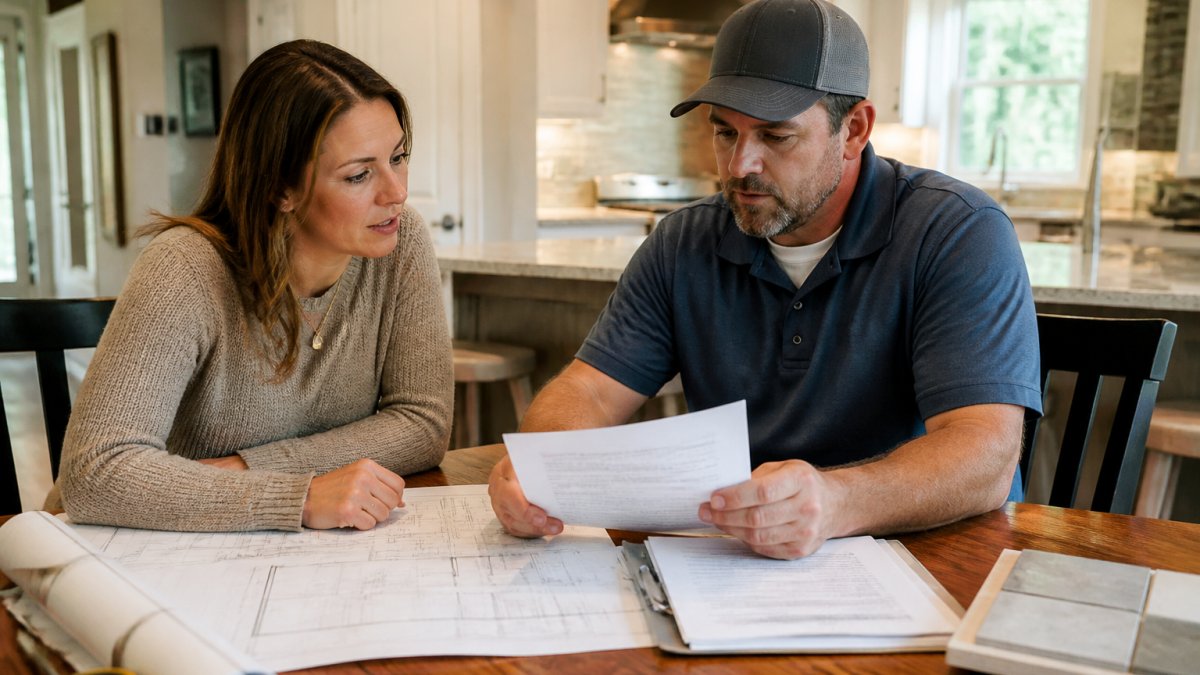 Process flowchart for home renovation project management showing contractor document review steps
Vetting Credentials and References
Start by verifying licenses. In most states, general contractors must be licensed.
Verify insurance. Your contractor should carry general liability insurance and workers' compensation insurance. Ask to see certificates of insurance.
Ask for references from recent projects, ideally from the past 12 months. Call those references.
Check online reviews on platforms like HomeAdvisor, Angi, and the Better Business Bureau. Look for patterns.
Interview multiple contractors. Get written estimates from at least three. Compare not just price but what's included in the estimate.
Managing Contractor Relationships
Once you've hired your contractor, your relationship determines how smoothly the project runs. Clear communication and documented agreements prevent most problems.
Put everything in writing.
Establish a communication protocol. How often will you get updates? How will you communicate (phone, email, text)? Who's your primary contact? What's the process for raising concerns?
Discuss the payment schedule upfront.
Address the contingency conversation directly. Explain that you've budgeted for unexpected costs, but that you expect the contractor to identify and discuss them with you before proceeding.
How to Manage Renovation Stress
Renovations are disruptive. Your home is a construction zone. Dust gets everywhere. Noise happens early. Routines are disrupted.
Establish boundaries. If you have young children or pets, decide which areas are off-limits during construction.
Expect delays. Weather delays construction. Material delays happen. Inspections sometimes require corrections that take additional time.
Keep perspective on the disruption. A kitchen renovation takes 8-12 weeks. A bathroom update takes 4-6 weeks. It's temporary.
Maintain communication with your contractor. If something is bothering you, noise levels, cleanliness, scheduling, address it directly.
Change Orders, Quality Control, and the Final Punch List
Change orders are how you modify the scope of work during construction. They're inevitable, and handling them correctly protects both you and your contractor.
A change order documents what's changing, why, and what it costs.
Distinguish between necessary changes and scope creep.
Quality control happens throughout construction, not just at the end.
The punch list is the final step.
Managing a home renovation successfully means staying organized, communicating clearly, and staying involved throughout the process.
SmithFamilyPaintingandProjects provides expert general contracting, remodeling, and renovation services to homeowners in Southside Virginia. As a licensed, bonded, and insured Class A contractor, we handle the complexity so you don't have to. From initial planning through final punch list, we maintain transparent communication and deliver the quality workmanship your home deserves. If you're planning a renovation in Southside Virginia, call us at 434-944-4649 to discuss your project.
Frequently Asked Questions
What is the 30% rule for home renovations?
The 30% rule suggests allocating 30% of your home's current value toward renovation costs to maintain strong return on investment. For example, if your home is worth $300,000, a $90,000 renovation aligns with this guideline. However, the actual budget should reflect your specific scope of work, local building codes, and contractor estimates. Work with your general contractor to develop a realistic budget based on your project's actual specifications and complexity.
How do I create a realistic home renovation budget?
Start by defining your scope of work in detail, every material, fixture, and service. Get multiple estimates from licensed contractors. Add a contingency budget of 15-20% for unexpected costs like structural issues or code compliance upgrades. Include permits, inspections, and any specialized labor. Break costs into categories: materials, labor, permits, and equipment rental. Document everything in writing with your contractor to prevent surprise cost overruns and ensure project transparency.
What are the biggest home renovation mistakes to avoid?
Common mistakes include underestimating costs and timelines, skipping permits to save money, hiring unlicensed or uninsured contractors, not getting detailed construction documents, and failing to plan for contingencies. Many homeowners also neglect site safety protocols and skip quality inspections. Avoid making major decisions without consulting your contractor, and don't ignore warning signs like structural issues or outdated mechanicals during the planning phase. Work with a licensed general contractor who prioritizes building codes compliance.
How do I keep track of contractors and project timelines?
Use a project management checklist that tracks milestones, vendor contact information, payment schedules, and inspection dates. Establish clear communication protocols with your contractor, weekly check-ins, written change orders, and photo documentation. Create a timeline with start and completion dates for each phase: demolition, framing, electrical rough-in, plumbing fixtures, drywall installation, and finish work. Request a detailed project schedule from your contractor upfront, and hold regular meetings to monitor progress and address delays before they escalate.
How do I know a contractor is licensed, bonded, and insured?
Ask the contractor directly for their license number, bonding certificate, and insurance documentation. Verify their Class A HIC (Home Improvement Contractor) license with your state's licensing board. Check their BBB rating and HomeAdvisor profile for A+ ratings and verified reviews. Request references from recent projects and call them. A trustworthy contractor will readily provide all credentials and encourage you to verify. Licensed contractors carry liability insurance and bonding to protect you if something goes wrong.
What should I include in a home renovation punch list?
A punch list documents incomplete or substandard work before final payment. Include items like touch-ups, missing trim, fixture installation issues, paint imperfections, and any work that doesn't meet specifications. Walk through the project with your contractor and photograph any items needing correction. Create a written list with specific locations and descriptions. Agree on a deadline for punch list completion before final payment. This protects your investment and ensures quality standards are met before the project closes.
How do I manage change orders during a renovation?
Change orders modify the original scope of work and typically affect budget and timeline. When changes arise, get a written change order from your contractor detailing the work, cost, and timeline impact before proceeding. Avoid verbal agreements. Review the change order carefully and compare it against your original specifications. Discuss how the change affects your contingency budget and overall project timeline. Keep all change orders filed with your construction documents for your records and future reference.
Frequently asked questions
What is the 30% rule for home renovations?
The 30% rule suggests allocating 30% of your home's current value toward renovation costs to maintain strong return on investment. For example, if your home is worth $300,000, a $90,000 renovation aligns with this guideline. However, the actual budget should reflect your specific scope of work, local building codes, and contractor estimates. Work with your general contractor to develop a realistic budget based on your project's actual specifications and complexity.
How do I create a realistic home renovation budget?
Start by defining your scope of work in detail—every material, fixture, and service. Get multiple estimates from licensed contractors. Add a contingency budget of 15-20% for unexpected costs like structural issues or code compliance upgrades. Include permits, inspections, and any specialized labor. Break costs into categories: materials, labor, permits, and equipment rental. Document everything in writing with your contractor to prevent surprise cost overruns and ensure project transparency.
What are the biggest home renovation mistakes to avoid?
Common mistakes include underestimating costs and timelines, skipping permits to save money, hiring unlicensed or uninsured contractors, not getting detailed construction documents, and failing to plan for contingencies. Many homeowners also neglect site safety protocols and skip quality inspections. Avoid making major decisions without consulting your contractor, and don't ignore warning signs like structural issues or outdated mechanicals during the planning phase. Work with a licensed general contractor who prioritizes building codes compliance.
How do I keep track of contractors and project timelines?
Use a project management checklist that tracks milestones, vendor contact information, payment schedules, and inspection dates. Establish clear communication protocols with your contractor—weekly check-ins, written change orders, and photo documentation. Create a timeline with start and completion dates for each phase: demolition, framing, electrical rough-in, plumbing fixtures, drywall installation, and finish work. Request a detailed project schedule from your contractor upfront, and hold regular meetings to monitor progress and address delays before they escalate.
How do I know a contractor is licensed, bonded, and insured?
Ask the contractor directly for their license number, bonding certificate, and insurance documentation. Verify their Class A HIC (Home Improvement Contractor) license with your state's licensing board. Check their BBB rating and HomeAdvisor profile for A+ ratings and verified reviews. Request references from recent projects and call them. A trustworthy contractor will readily provide all credentials and encourage you to verify. Licensed contractors carry liability insurance and bonding to protect you if something goes wrong.
What should I include in a home renovation punch list?
A punch list documents incomplete or substandard work before final payment. Include items like touch-ups, missing trim, fixture installation issues, paint imperfections, and any work that doesn't meet specifications. Walk through the project with your contractor and photograph any items needing correction. Create a written list with specific locations and descriptions. Agree on a deadline for punch list completion before final payment. This protects your investment and ensures quality standards are met before the project closes.
How do I manage change orders during a renovation?
Change orders modify the original scope of work and typically affect budget and timeline. When changes arise, get a written change order from your contractor detailing the work, cost, and timeline impact before proceeding. Avoid verbal agreements. Review the change order carefully and compare it against your original specifications. Discuss how the change affects your contingency budget and overall project timeline. Keep all change orders filed with your construction documents for your records and future reference.