Are Modern Kitchen Cabinet Styles Worth It? A 2026 Guide
blog · September 12, 2026 · Editorial Team
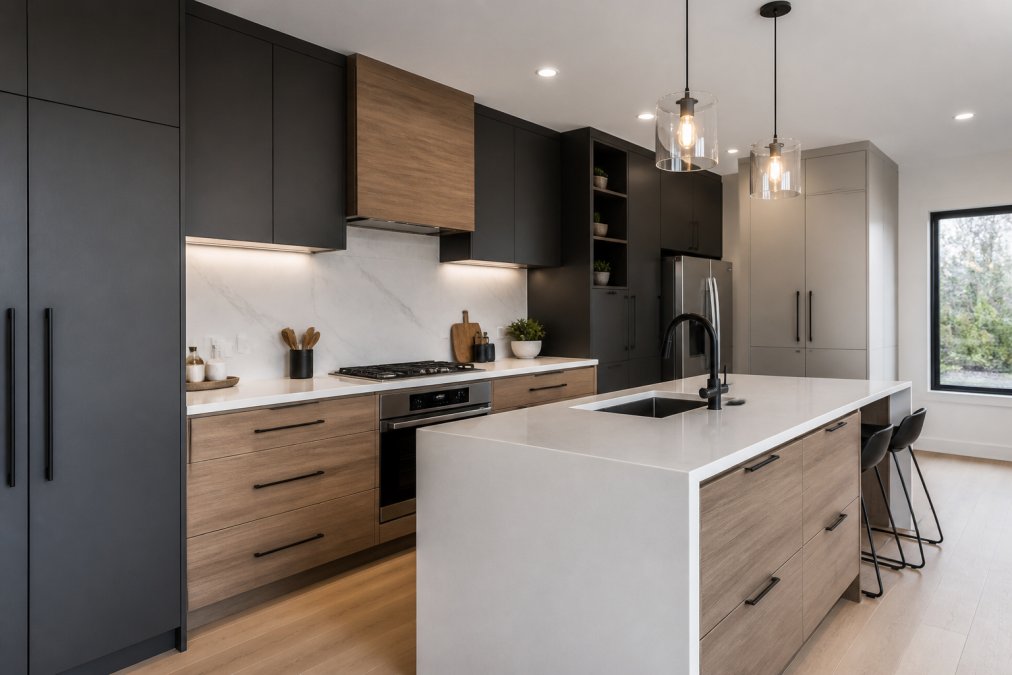
Table of Contents
- Modern vs. Traditional Cabinet Styles: What's the Real Difference?
- The Cost of Kitchen Cabinet Replacement: What Homeowners Actually Pay
- Kitchen Remodeling ROI: Do Modern Cabinets Pay You Back?
- Durability and Maintenance: How Modern Cabinets Hold Up Over Time
- Storage, Accessibility, and Smart Kitchen Integration
- Are Modern Kitchen Cabinet Styles Worth It for Your Home?
- Conclusion: Making the Right Call for Your Kitchen
- Frequently Asked Questions
Last Updated: September 12, 2026
Modern vs. Traditional Cabinet Styles: What's the Real Difference?
Modern kitchen cabinet styles are worth it for homeowners who value clean lines, functional storage, and strong resale appeal. Traditional cabinets lean on raised-panel doors, ornate molding, and warm wood tones. Modern designs favor flat surfaces, minimal hardware, and integrated storage. The honest answer is that "worth it" depends on your goals, your layout, and how long you plan to stay.
Traditional cabinetry is built on decorative detail: raised center panels, crown molding, and visible hinges. Modern cabinetry is built on subtraction: flat doors, hidden hardware, and clean lines. Neither is objectively better, they solve different problems for different homes.
Most guides sell you on looks. The real question is whether a modern kitchen earns back what you spend, holds up over time, and fits how you actually cook and store things.
Flat-Panel vs Shaker Cabinets: Which Door Style Fits Your Kitchen?
Flat-panel doors are the purest expression of modern design, while Shaker doors sit between traditional and modern and suit more homes. A flat-panel door is a single slab with no frame or recessed center; a Shaker door has a recessed center panel framed by four pieces of wood, adding visual depth without ornamentation.
Here's the practical difference:
- Flat-panel: easiest to wipe clean, no grooves to trap grease, but shows fingerprints and dents more readily
- Shaker: more forgiving of wear, reads as "modern but warm," and pairs with almost any cabinet hardware
- High-gloss finishes: striking in photos, but they magnify every smudge and scratch in a working kitchen
- Matte and wood veneer finishes: hide daily wear better and photograph well without the upkeep
Coming from heavy oak raised-panel doors, Shaker reads as a full modern update to guests.
The Cost of Kitchen Cabinet Replacement: What Homeowners Actually Pay
Cost is where most "worth it" questions actually live. Cabinet pricing falls into three buckets, and the tier you pick matters more than the door style you fall in love with.
- Stock (ready-to-assemble and in-stock): fixed sizes, limited finishes, sold by the box. Lowest cost per linear foot, fastest lead time, and the least forgiving if your walls aren't square.
- Semi-custom: standard box sizes with adjustable widths, more door styles and finishes, and a lead time measured in weeks rather than days. This is where most modern flat-panel and Shaker kitchens land.
- Custom: built to your exact dimensions, any finish, any configuration. Highest cost, longest lead time, and the only tier that solves genuinely awkward layouts.
Within each tier, the line items that move the number are consistent:
- Cabinet box construction and material grade, plywood boxes hold up better around sinks and dishwashers than particleboard, and the price reflects it.
- Door style and finish, a painted Shaker door and a high-gloss lacquer door can differ substantially even when the box underneath is identical.
- Hardware, soft-close hinges and full-extension drawer slides are usually a modest upcharge per drawer and the single best durability spend in the project.
- Layout changes, moving a sink, range, or refrigerator triggers plumbing and electrical work that has nothing to do with cabinetry.
- Adjacent trades, countertops, backsplash, flooring, and painting are frequently done at the same time and belong in the same budget conversation.
Refacing versus replacing is the fork in the road. Refacing keeps your existing boxes and replaces the doors, drawer fronts, and veneer. It costs meaningfully less than full replacement and takes days instead of weeks, but only makes sense if the boxes are square, dry, and the layout already works. If the boxes are swollen from a past leak or the layout fights how you cook, refacing is money spent polishing a problem.
Because pricing varies so widely by region, tier, and scope, a ballpark figure is close to useless. Ask for an itemized quote separating boxes, doors, hardware, labor, and trade work, so you can see where the money goes and where you could cut without gutting durability.
DIY vs. Professional Installation: Where the Real Cost Difference Lives
The installation question is where a meaningful chunk of the budget sits. Stock and semi-custom flat-panel cabinets are more DIY-friendly than traditional cabinets with applied molding, because there's no crown to miter and no raised panel to align. But modern cabinets are less forgiving of a bad wall: flat doors and tight reveals make out-of-square walls and uneven floors obvious in a way ornate traditional cabinetry hides.
A realistic read on the split:
- Genuinely DIY-able: assembling RTA boxes, hanging upper cabinets on a flat, plumb wall, installing pulls and knobs.
- Usually worth hiring out: scribing cabinets to uneven walls, cutting for sinks and cooktops, running new electrical for under-cabinet lighting, and anything involving plumbing relocation.
- Almost always hire out: custom cabinetry, integrated appliances, and any layout change that touches mechanical systems.
If you're weighing DIY to save money, price the tools, the time off work, and the cost of fixing a mistake on a flat-panel door that can't be sanded and repainted like a traditional door. For many homeowners the savings shrink once those are counted.
 Homeowner and contractor reviewing an itemized cabinet quote at a kitchen table with cabinet door samples
Kitchen Remodeling ROI: Do Modern Cabinets Pay You Back?
Kitchen remodeling ROI varies by market, but kitchens consistently rank among the renovations that return the most at resale. Dated cabinets are one of the fastest ways to date a home, and modern cabinets with clean lines and durable finishes photograph better in listings, which matters because most buyers see your kitchen online first.
A few things shape your return:
- Home equity context: a kitchen update in a home that's already at the top of its neighborhood price band returns less than the same update in an average home
- Buyer expectations: minimalist aesthetic and contemporary design read as "move-in ready"
- Consistency: modern cabinets in a traditional house can look out of place and hurt perceived value
The National Association of Realtors remodeling impact research consistently finds kitchens and baths among the highest-return interior projects, though exact figures shift with the market. The takeaway isn't a single number. It's that kitchens move the needle more than almost any other room.
Durability and Maintenance: How Modern Cabinets Hold Up Over Time
Most articles stop at "wipe them with a soft cloth." The useful question is how each modern finish ages over ten years of real cooking, because that's where the "worth it" math holds up or falls apart.
High-gloss lacquer and acrylic. Beautiful on day one and the most demanding over time. The surface is hard and easy to wipe, but shows every fingerprint and scratches. Once scratched, it usually can't be spot-repaired, the whole door must be refinished or replaced to match. With kids or pets, this finish looks tired first.
Matte and satin lacquer or painted finishes. The most forgiving modern finish. Scuffs and light scratches can often be touched up with matching paint, and the low sheen hides daily wear. The trade-off: matte shows grease film in a heavy-cooking kitchen and needs more frequent cleaning than gloss.
Thermofoil and laminate (including high-gloss laminate). Durable, easy to clean, and the most common finish on semi-custom modern cabinets. The failure mode is at the edges: heat and moisture lift and peel laminate or thermofoil at corners and around the dishwasher. Once it peels, it can't be sanded and repainted like wood.
Wood veneer. Warm and repairable, but the most moisture-sensitive modern option. Veneer near a sink or dishwasher can lift if water sits on it and needs more careful cleaning than laminate. On the plus side, minor damage can often be sanded and refinished, which laminate and thermofoil cannot.
Solid wood doors. The most repairable and most expensive option. They move with humidity, causing seasonal gaps and, in dry climates, hairline cracks in painted doors. They can be sanded and repainted repeatedly, which is why they outlast almost everything else.
The pattern is the same across all of these: the door finish determines how the kitchen looks in year ten, but the box and hardware determine whether it still functions. Particleboard boxes swell permanently when water reaches them, and no door upgrade fixes a swollen box. Soft-close hinges and drawer slides are wear items, expect to replace them at least once, and buy hardware with a lifetime warranty where you can.
Sustainability and Eco-Friendly Manufacturing
This angle is increasingly part of how homeowners judge whether modern cabinets are "worth it." Modern cabinet manufacturing leans heavily on engineered wood, medium-density fiberboard (MDF), particleboard, and plywood, and the binders and finishes used in that production are where the environmental story lives.
A few practical things to look for:
- Low- or no-added-formaldehyde (NAF) panels. Formaldehyde-based binders are common in engineered wood, and indoor air quality is the main reason buyers seek alternatives (the EPA). Ask specifically whether the box and door substrate are NAF or ultra-low-emitting formaldehyde (ULEF).
- FSC-certified wood. The Forest Stewardship Council certifies wood and wood products from responsibly managed forests. It's a recognizable label you can ask a cabinet maker to confirm.
- Low-VOC and water-based finishes. Solvent-based lacquers off-gas longer than water-based finishes. If you're sensitive to finishes or installing in a tight space, this matters.
- Recycled and rapidly renewable content. Some modern cabinet lines use recycled content in panels or bamboo and other fast-growing materials in place of slow-growth hardwoods.
- Refacing and refinishing as the greenest option. Keeping existing boxes and replacing only doors and fronts avoids the embodied carbon of new cabinetry entirely. It's often the lowest-impact choice and frequently the lowest-cost one.
None of this makes modern cabinets inherently sustainable or unsustainable. The material spec is the deciding factor, the same conclusion the durability question reaches from a different direction.
Storage, Accessibility, and Smart Kitchen Integration
Storage capacity and accessibility matter more than most homeowners expect. Deep drawers beat base cabinets with shelves because you can see and reach everything. Pull-out trays, corner carousels, and full-extension drawer slides turn dead space into usable space. This is where modern cabinetry quietly outperforms traditional designs.
Smart kitchen integration is the newer frontier, and worth approaching with caution. Under-cabinet lighting, charging drawers, and app-controlled lighting are increasingly common, but integrated tech adds cost and a future repair point. If a smart feature fails, you're repairing electronics, not cabinetry.
- Space optimization: drawers over doors, pull-outs in corners, vertical dividers for trays
- Ergonomics: work zones sized to the cook, not the catalog
- Accessibility: soft-close hinges and slides reduce noise and wear
Are Modern Kitchen Cabinet Styles Worth It for Your Home?
Modern kitchen cabinet styles are worth it when three things line up: you plan to stay or sell in a market that rewards updated kitchens, your home's style supports a modern look, and you invest in solid boxes and hardware rather than just a trendy finish. If any is missing, a partial update often beats a full replacement.
Consider refacing or painting existing boxes if the layout works and the boxes are sound. That keeps the cost of kitchen cabinet replacement lower while still delivering a modern look. Full replacement earns its keep when the layout is broken, the boxes are failing, or you're doing a broader kitchen renovation anyway.
ENERGY STAR guidance on kitchen and appliance efficiency
Conclusion: Making the Right Call for Your Kitchen
The decision comes down to your goals, timeline, and budget, not the trend of the year. Modern cabinets reward homeowners who plan for durability and resale, and disappoint those who chase a finish without fixing the fundamentals underneath. The decision comes down to your goals, timeline, and budget, not the trend of the year. Modern cabinets reward homeowners who plan for durability and resale, and disappoint those who chase a finish without fixing the fundamentals underneath. Call 434-944-4649 to talk through your kitchen and get an honest assessment of what your space actually needs. Call 434-944-4649 to talk through your kitchen and get an honest assessment of what your space actually needs.
Frequently Asked Questions
Are modern kitchen cabinets more expensive than traditional styles?
Modern cabinets often cost more upfront because flat-panel doors with high-gloss or matte finishes require precise manufacturing, and many include soft-close hinges and premium drawer slides. However, the gap has narrowed as laminate and wood veneer options have improved. The total cost of kitchen cabinet replacement depends on size, materials, and whether you choose stock, semi-custom, or custom cabinetry. Get a detailed quote based on your specific layout before comparing styles.
Do modern kitchen cabinets hold their value for home resale?
Kitchen remodeling ROI varies by market, but modern cabinets consistently rank among the top features buyers notice. Clean lines, durable finishes, and efficient storage appeal to a broad range of buyers. That said, overly trendy designs can date quickly. Choosing a minimalist aesthetic with quality hardware and neutral tones tends to hold value longer than bold, highly specific styles.
What are the pros and cons of flat-panel cabinet doors?
Flat-panel doors offer a sleek, minimalist look that's easy to clean and works well in contemporary and midcentury modern kitchens. They can show fingerprints more on high-gloss finishes and may lack the decorative depth some homeowners want. Shaker cabinets, by contrast, add visual interest and hide smudges better. Your choice depends on your kitchen layout, how much maintenance you want, and your overall design goals.
How do modern cabinet finishes compare to traditional wood stains in durability?
Modern finishes like high-gloss laminate and factory-applied wood veneer resist moisture, scratches, and fading better than many traditional stained woods, which can warp or discolor over time. Durable finishes also make surface cleaning easier. However, any cabinet can wear if exposed to excessive heat or moisture. Proper installation and routine care extend cabinetry lifespan regardless of style.
Modern cabinet choices can transform a kitchen, but only when the plan behind them is sound. SmithFamilyPaintingandProjects brings licensed, bonded, and insured Class A contracting, honest communication, and skilled workmanship to every remodel, from a single cabinet refresh to a full kitchen renovation. Get started with SmithFamilyPaintingandProjects and build a kitchen that looks right today and holds its value for years.
Frequently asked questions
Are modern kitchen cabinets more expensive than traditional styles?
Modern cabinets often cost more upfront because flat-panel doors with high-gloss or matte finishes require precise manufacturing, and many include soft-close hinges and premium drawer slides. However, the gap has narrowed as laminate and wood veneer options have improved. The total cost of kitchen cabinet replacement depends on size, materials, and whether you choose stock, semi-custom, or custom cabinetry. Get a detailed quote based on your specific layout before comparing styles.
Do modern kitchen cabinets hold their value for home resale?
Kitchen remodeling ROI varies by market, but modern cabinets consistently rank among the top features buyers notice. Clean lines, durable finishes, and efficient storage appeal to a broad range of buyers. That said, overly trendy designs can date quickly. Choosing a minimalist aesthetic with quality hardware and neutral tones tends to hold value longer than bold, highly specific styles.
What are the pros and cons of flat-panel cabinet doors?
Flat-panel doors offer a sleek, minimalist look that's easy to clean and works well in contemporary and midcentury modern kitchens. They can show fingerprints more on high-gloss finishes and may lack the decorative depth some homeowners want. Shaker cabinets, by contrast, add visual interest and hide smudges better. Your choice depends on your kitchen layout, how much maintenance you want, and your overall design goals.
How do modern cabinet finishes compare to traditional wood stains in durability?
Modern finishes like high-gloss laminate and factory-applied wood veneer resist moisture, scratches, and fading better than many traditional stained woods, which can warp or discolor over time. Durable finishes also make surface cleaning easier. However, any cabinet can wear if exposed to excessive heat or moisture. Proper installation and routine care extend cabinetry lifespan regardless of style.